
The Vasai chawl system has played a crucial role in shaping the region’s housing landscape, offering affordable living spaces while fostering strong community bonds.
Table of Contents
History of the Vasai Chawl System
The origins of the Vasai chawl system can be traced back to the 19th and early 20th centuries. During this period, western India saw rapid industrial growth, attracting thousands of workers to urban centers in search of jobs.
To accommodate this growing population, developers introduced chawls – compact residential buildings designed to house multiple families within limited space. Over time, this system extended into Vasai taluka, especially around railway hubs like Vasai Road, Nallasopara, and Virar.
Today, the Vasai chawl system continues to exist and has expanded across several areas, particularly in the eastern parts of Naigaon, Vasai, Nallasopara, and Virar.
What Defines the Vasai Chawl System?
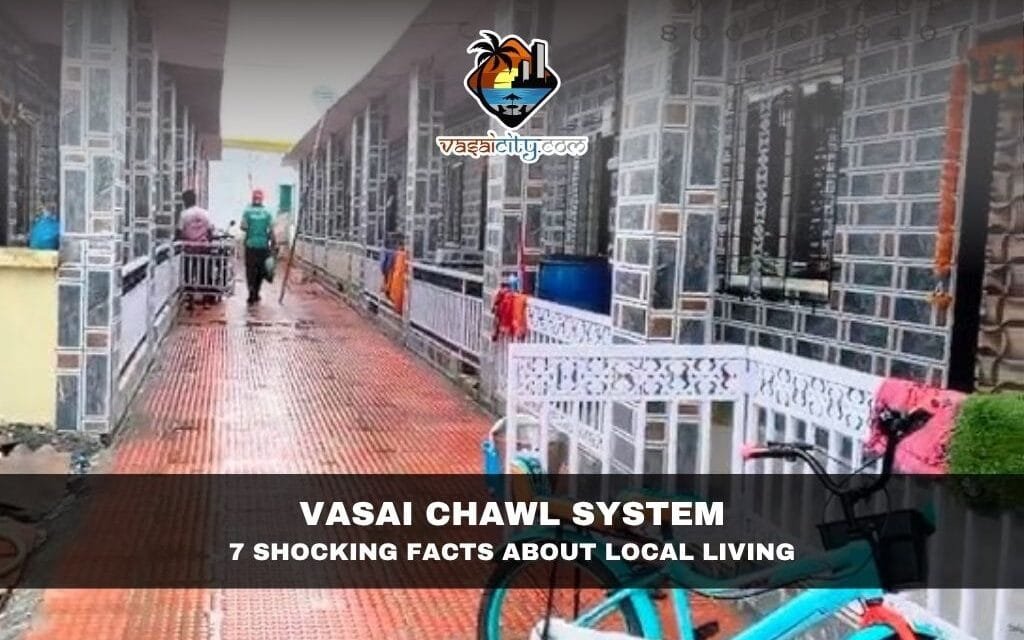
The Vasai chawl system typically consists of low-rise structures with small, single-room units arranged along long corridors. These homes are practical and affordable, making them popular among the lower middle-income group.
Key Features Include:
- Compact 1RK or 1BHK units
- Shared or individual bathrooms
- Long corridors (galleries)
- Limited but functional space
- Close proximity to markets, schools, and transport
Despite limited privacy, the layout encourages social interaction, which is a defining feature of the Vasai chawl system.
Affordable Housing in the Vasai Chawl System
One of the biggest attractions of the Vasai chawl system is affordability. Many chawl units are priced between ₹4 lakh and ₹15 lakh, making them accessible to first-time buyers.
Rental options are also budget-friendly:
- Monthly rent: ₹2,000 to ₹4,000
- Deposit schemes: Around ₹1 lakh (interest-free, long-term arrangement)
These properties are often marketed as ready-to-move homes and can be found on platforms like OLX and Facebook groups.
However, buyers should proceed with caution, as not all properties under the Vasai chawl system are legally approved.
Legal Risks in the Vasai Chawl System
A significant concern associated with the Vasai chawl system is the prevalence of unauthorized constructions.
Many chawls are:
- Built without proper approvals
- Located on encroached or government land
- At risk of demolition
Local authorities have issued repeated warnings against investing in undocumented properties. Before purchasing, it is essential to verify documents with official sources like the municipal corporation.
Ignoring these checks can lead to financial loss and legal complications.
Community Life in the Vasai Chawl System
Beyond affordability, the Vasai chawl system is known for its strong sense of community. Residents often share close relationships, celebrating festivals and supporting each other in daily life.
Social Highlights:
- Collective celebration of festivals like Ganesh Chaturthi, Diwali, and Holi
- Strong neighborhood bonds
- Shared responsibilities and mutual support
This cultural richness is one of the reasons why many people continue to prefer the Vasai chawl system, despite its limitations.
Challenges Faced by Residents
While the Vasai chawl system offers affordability and community, it also comes with several challenges:
- Overcrowding
- Poor sanitation in older buildings
- Aging infrastructure
- Lack of privacy
- Risk of structural damage
In some cases, old chawls have even faced collapse risks, making safety a serious concern.
Redevelopment and Changing Landscape
In recent years, many old chawls near railway stations have undergone redevelopment into modern apartment complexes.
This transformation has improved living standards by providing:
- Better infrastructure
- Private amenities
- Enhanced safety
However, redevelopment also leads to the decline of traditional chawl culture. The close-knit social fabric that defines the Vasai chawl system is often replaced by a more individualistic lifestyle.
Should You Invest in the Vasai Chawl System?
Investing in the Vasai chawl system can be a good option for those seeking affordable housing. However, it is crucial to:
- Verify property legality
- Check ownership documents
- Confirm approvals from local authorities
Making an informed decision can help avoid future complications.
Conclusion
The Vasai chawl system remains an important part of the region’s identity. It reflects the resilience, adaptability, and cultural richness of the working-class population.
Even as modernization reshapes the urban landscape, the Vasai chawl system continues to stand as a symbol of affordable housing and strong community living in Vasai.
Inputs by Biju Cherian
This article is based on the author’s research and perspectives. The publisher claims no responsibility for inaccuracies. Views expressed are the contributor’s alone. Institutions mentioned are not endorsed unless specified.