
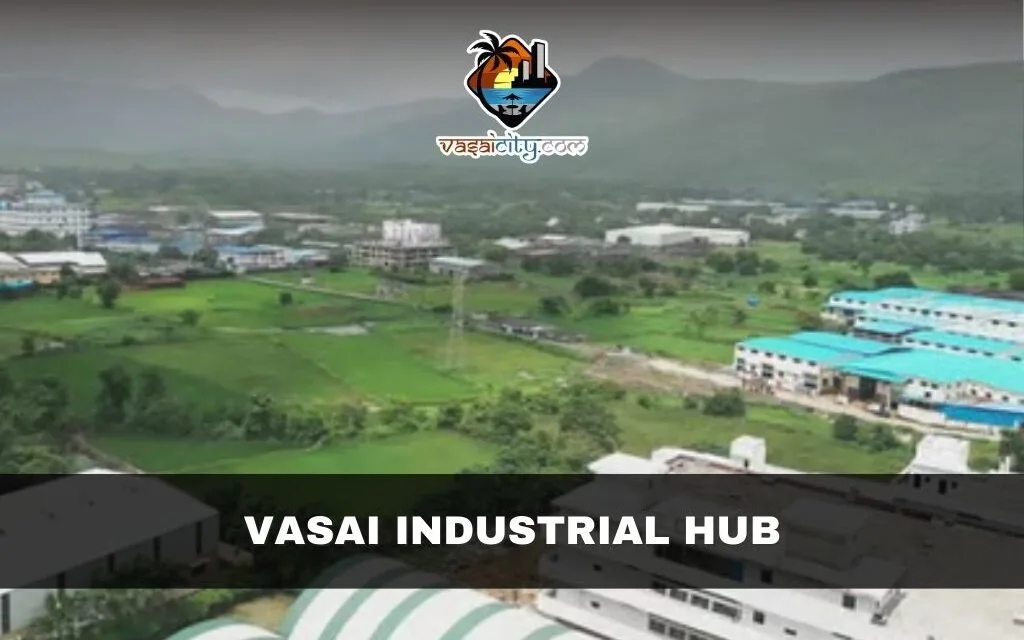
The Vasai industrial hub has steadily grown into the most powerful economic engine of Palghar district, offering maximum employment and manufacturing opportunities across the region. While areas like Tarapur, Palghar and Dahanu are known for industry and trade, Vasai stands apart due to its scale, diversity and strategic location.
For decades, the Vasai industrial hub has supported thousands of families and played a crucial role in shaping the district’s economic identity. From furniture manufacturing to die-making units, Vasai’s contribution to Maharashtra’s industrial landscape remains significant.
Table of Contents
Why Vasai Industrial Hub Dominates Palghar District
Among all industrial zones in Palghar, the Vasai industrial hub provides the highest number of direct and indirect jobs. The eastern part of Vasai is densely industrialised, housing hundreds of small and medium-scale manufacturing units.
These factories cater not just to Palghar but to Mumbai, Thane, Pune and even South Gujarat. Entrepreneurs rely on Vasai for consistent supply, skilled labour and quick market access.
Short supply chains, experienced workers and long-established business ecosystems make the Vasai industrial hub highly competitive despite rising challenges.
Industrial Zones That Power the Vasai Industrial Hub
Eastern Vasai: The Manufacturing Core
The eastern belt of the Vasai industrial hub includes major industrial estates such as Navghar, Gokhivare, Valiv, Sativali and parts of Papdy. These areas are directly connected to the Mumbai–Ahmedabad Highway, ensuring fast movement of goods.
Hundreds of units here manufacture furniture, hardware components, moulds, dies and industrial accessories. Transport companies have also flourished in Vasai East, making logistics a key strength of the Vasai industrial hub.
However, this rapid growth has also exposed weaknesses in internal infrastructure, which continue to trouble business owners.
Western Vasai: Small but Well-Planned
Compared to the east, the Papdy Industrial Area in Vasai West is smaller but better organised. Roads, drainage, utilities and civic facilities are relatively well maintained, making it a more structured part of the Vasai industrial hub.
Dozens of small and medium enterprises operate here, benefiting from smoother operations and easier compliance. Despite its limited size, Papdy plays an important role in balancing industrial activity on the western side.
Vasai Industrial Hub: Mumbai’s Nearest Manufacturing Partner
One major advantage of the Vasai industrial hub is its proximity to Mumbai, Mira-Bhayandar, Thane, Bhiwandi and South Gujarat. This connectivity has fuelled industrial, economic and infrastructural development over the last five decades.
Rail and road networks, nearby ports, airline connectivity and warehouses allow Vasai-based manufacturers to serve large markets quickly. Easy access to raw materials and labour further strengthens the Vasai industrial hub’s appeal.
According to industry estimates, nearly 30–40% of modular furniture used in Mumbai is produced in Vasai-based units. Many manufacturers in Mumbai and Pune also depend on Vasai for dies and moulds.
Furniture and Die-Making: The Backbone Industries
For over 50 years, the Vasai industrial hub has been known as a leading centre for regular and modular furniture manufacturing. Entire clusters of micro, small and medium enterprises focus exclusively on furniture and allied products.
Another key sector is die-making, where many skilled workers, particularly from Kerala, have established long-term businesses. These units support automobile, plastic and engineering industries across western India.
Together, these industries have helped Vasai build a reputation as a dependable and cost-effective manufacturing destination.
Infrastructure Challenges Threaten the Vasai Industrial Hub
Despite its strengths, the Vasai industrial hub is facing growing challenges. Over the last few years, several factories—especially in Vasai East—have started relocating.
The main reasons include:
- Poor internal road conditions
- Inadequate drainage and water supply
- Erratic electricity supply
- Rising licensing fees
- Increasing municipal taxes
Many internal roads have not been repaired for years, making heavy industrial transport difficult and unsafe. Business owners say these issues increase operating costs and reduce efficiency.
Rising Taxes Push Industries Out of Vasai
The Vasai-Virar City Municipal Corporation (VVCMC) has revised tax rates and increased license fees for new factories. As a result, several industrial units from the Vasai industrial hub are shifting operations to South Gujarat, Boisar and other parts of Palghar.
This migration poses a long-term risk to local employment and economic stability. Industry associations have repeatedly urged authorities to improve infrastructure and reconsider taxation policies.
Workforce: The Real Strength of Vasai Industrial Hub
One of the most positive aspects of the Vasai industrial hub is its workforce. Most workers are locals or migrants from North India who have been employed here for decades.
Many have achieved financial stability, and some have even purchased homes in the Vasai-Virar region. This reflects the long-term sustainability and social impact of industrial growth in Vasai.
The availability of skilled and semi-skilled labour continues to attract new entrepreneurs, despite existing challenges.
What the Government Needs to Do
To retain and strengthen the Vasai industrial hub, experts suggest urgent focus on:
- Repairing internal industrial roads
- Improving drainage and water supply
- Ensuring stable power availability
- Rationalising license fees and taxes
State and central government schemes for MSMEs can play a crucial role if implemented effectively. More details on industrial support policies are available on the official MSME portal of the Government of India.
Future of Vasai Industrial Hub
The Vasai industrial hub remains a cornerstone of Palghar district’s economy. With better planning and policy support, it can continue to generate jobs, support entrepreneurs and reduce pressure on Mumbai’s industrial zones.
Ignoring infrastructure issues, however, could weaken one of Maharashtra’s most valuable manufacturing clusters. The next few years will be critical in determining whether Vasai retains its industrial leadership or loses ground to emerging hubs.
Inputs by Biju Cherian
This article is based on the author’s research and perspectives. The publisher claims no responsibility for inaccuracies. Views expressed are the contributor’s alone. Institutions mentioned are not endorsed unless specified.