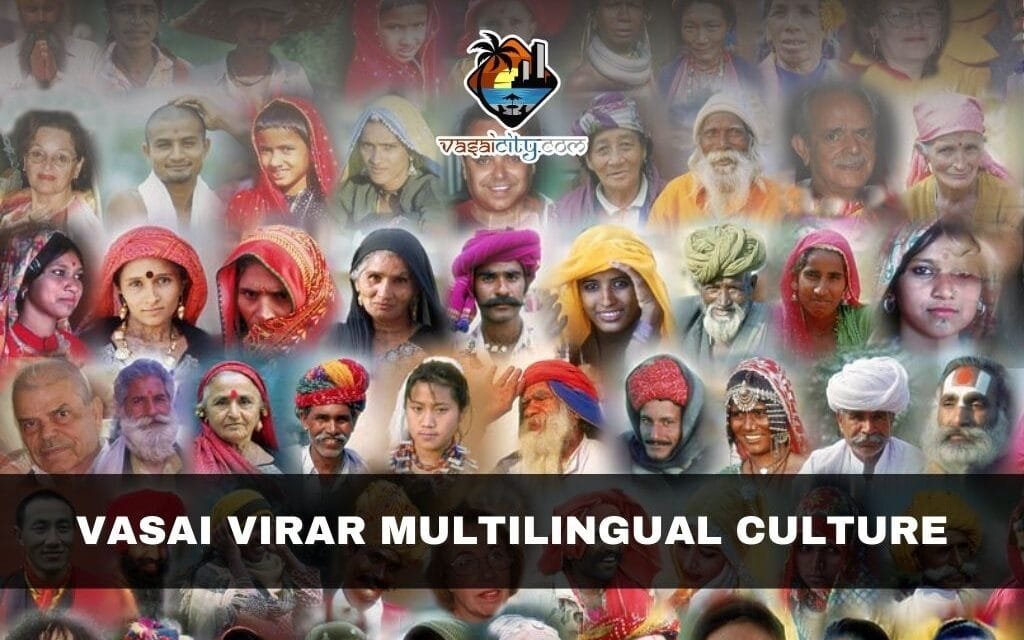
Vasai Virar Multilingual Culture has been the heart and identity of the region for generations, shaping a community that thrives on diversity, language, and belonging. Contrary to claims that the subregion is monocultural, the history, demographics, and lived experience of its residents paint a very different and powerful reality. Vasai Virar has always been a melting pot—where varied languages and cultures blend seamlessly into everyday life.
Table of Contents
A City Built on Cultural Harmony
Vasai Virar is home to residents who have migrated from different states and linguistic backgrounds over many decades. What makes this region truly unique is the ability of diverse communities to coexist peacefully while celebrating their cultural identity. Today, groups speaking Marathi, Gujarati, Hindi, Kannada, Malayalam, Tamil, Bengali, Punjabi, English, and Urdu, along with several smaller mother tongues, have created a vibrant ecosystem of traditions, festivals, and cuisines.
These communities are not fragmented minorities—they have established temples, churches, mosques, community halls, cultural associations, and neighbourhood marketplaces that reflect their heritage. Walk through any area—Nalasopara, Vasai, Virar, or surrounding villages—and you will hear conversations switching effortlessly between multiple languages within seconds.
Marathi — The Core Language of Daily Life
While Vasai Virar welcomes diversity, Marathi remains the dominant language spoken across homes, schools, and public institutions. Government offices, public announcements, official documentation, and cultural programs continue to be anchored in Marathi, maintaining the linguistic roots of the region.
The cultural influence of the Agri, East Indian and Koli communities, who are considered among the oldest inhabitants of Vasai, also shapes the Marathi identity of the city. Their history, traditions, and connection to the land are essential threads in the subregion’s cultural fabric.
The Rise of English-Medium Education
Over the past two decades, English-medium schools have significantly grown across Vasai Virar. This rise has created a strong and confident English-speaking generation, especially among young students who navigate multiple languages fluently. English is used prominently in education, careers, digital communication, and corporate workspaces.
Thanks to technological access and modern schooling, children here can simultaneously manage:
- Their mother tongue
- English
- Hindi
- Marathi
This makes multilingualism a natural skill rather than a forced academic requirement.
Hindi — The Language of the Marketplace
In commercial zones such as junction markets, railway stations, business hubs, and shopping clusters, Hindi has become the common transaction language. Shopkeepers, vendors, customers, and service providers rely heavily on Hindi to make communication simple and accessible. It supports economic inclusivity by allowing businesses to serve people from different states.
A Growing Cosmopolitan Identity
With its rapidly developing infrastructure, real estate growth, public transport expansion, and attractive living affordability, Vasai Virar has become a magnet for families migrating from metro cities like Mumbai, Surat, Bengaluru, Ahmedabad, and Kolkata.
This has created:
- Mixed cultural neighborhoods
- Community festivals celebrated by all religions and groups
- Fusion of foods from different states
- Social acceptance without linguistic barriers
The result is a naturally cosmopolitan environment, where diversity strengthens rather than divides.
Cuisines and Cultural Expressions
The multilingual identity of Vasai Virar is also celebrated through food, festivals, and traditions, including:
- Gujarati dhokla, thepla, undhiyu
- South Indian dosa, idli, appam, Kerala-style fish curry
- Punjabi chole bhature and kulcha
- Bengali sweets, mishti doi, and fish delicacies
- Marathi dishes like bombil fry, ukadiche modak, kombdi vade
- East Indian bottle masala specialities
During festivals like Ganesh Chaturthi, Onam, Navratri, Christmas, Eid, and Baisakhi, the participation of mixed cultural groups reinforces unity beyond language.
Diversity Is Not Accidental — It Is a Heritage
The people of Vasai Virar are deeply aware of their shared history. The region has been shaped by centuries of cultural exchange—from Portuguese influence in historical Vasai Fort, to migration and settlement patterns during industrial expansion and suburban growth surrounding railway connectivity.
Anyone claiming that Vasai Virar is monochromatic ignores documented history, community development, and demographic representation. The strength of Vasai Virar has always come from acceptance, plurality, respect, and coexistence, not from promoting a single narrative.
Official demographic records published by the Government of Maharashtra Census & District Data portal highlight the linguistic diversity of the subregion and support the fact that multilingualism has been a defining characteristic for decades.
Looking Toward the Future
As Vasai Virar continues to grow into a major urban hub, its multilingual population is expected to become an even greater asset. The ability to think, work, and communicate across languages will contribute to educational opportunities, business expansion, tourism, technology, and global investment.
Vasai Virar is proof that diversity strengthens identity—and multilingualism builds bridges, not divisions.
Inputs by Biju Cherian
This article is based on the author’s research and perspectives. The publisher claims no responsibility for inaccuracies. Views expressed are the contributor’s alone. Institutions mentioned are not endorsed unless specified.