Vasai East Indians form one of the oldest and most culturally rich communities in the Vasai region, with roots that go back centuries. Known for their deep connection to the land, faith, and Marathi heritage, the Vasai East Indians continue to preserve a unique identity even as modern influences reshape the city.
Table of Contents
Vasai East Indians: Original Inhabitants of the Region
The Vasai East Indians are widely regarded as the original inhabitants of the Vasai sub-region, long before European powers arrived on India’s western coast. These were local Marathi-speaking communities belonging to native groups such as Kunbis, Agris, Bhandaris, Prabhus, and Brahmins. Over time, many of them converted to Roman Catholicism during Portuguese rule, yet retained their indigenous customs and social structures.
Unlike later Catholic migrants from Goa or Mangalore, the Vasai East Indians were born of the soil of Vasai. Their identity is deeply tied to the land, villages, and traditions that existed even before colonial influence reshaped the region.
How the Name “East Indian” Came Into Use
Interestingly, the term Vasai East Indians was not always used. In earlier times, the local Catholic population was simply identified as the indigenous Catholic community of Bassein, now known as Vasai. In 1887, community leaders adopted the name “East Indian” to distinguish themselves from other Catholic groups in India.
The name symbolised their connection to the British East India Company’s territory and helped assert their status as the original residents of the region. This move was also crucial in preserving the unique identity of the Vasai East Indians during a time of social and political change.
Language and the Unique East Indian Marathi Dialect
One of the strongest cultural markers of the Vasai East Indians is their distinct East Indian Marathi dialect. Despite the growing dominance of Hindi and English in urban Vasai, many families continue to speak this dialect at home and during community gatherings.
The dialect blends traditional Marathi with influences from Portuguese vocabulary and expressions. This linguistic uniqueness reflects the long history of the Vasai East Indians and their ability to adapt without losing their roots.
Vasai East Indians and Their Rich Culinary Heritage
Food plays a central role in the life of the Vasai East Indians. Their cuisine is a delicious fusion of traditional Maharashtrian flavours and Portuguese-inspired recipes. Dishes are often prepared using coconut, rice, local spices, and seasonal ingredients sourced from nearby villages.
Classic East Indian meals are commonly prepared during festivals, weddings, and church feasts, ensuring that culinary traditions are passed down through generations. Even today, many Vasai East Indian households take pride in cooking traditional dishes rather than relying solely on modern fast food.
Churches as Spiritual and Social Centres
For the Vasai East Indians, churches are not just places of worship but also important social and cultural hubs. Parish churches have historically served as centres for education, charity, and community decision-making.
Over the decades, the Vasai East Indians have established an impressive network of institutions, including schools, colleges, healthcare centres, financial institutions, social service organisations, cultural centres, and publication houses. These institutions continue to support both religious and social development in Vasai.
From Agrarian Roots to Global Professionals
Traditionally, the Vasai East Indians were a closely knit agrarian community. Farming, fishing, and related occupations formed the backbone of village life. However, with the expansion of education and urbanisation, the community gradually transitioned into modern professions.
Today, Vasai East Indians can be found working as doctors, engineers, educators, entrepreneurs, and skilled professionals not just in Mumbai and Maharashtra, but across India and around the world. Despite this global spread, many families maintain strong ties with their ancestral villages in Vasai.
Village Traditions and Community Bonds
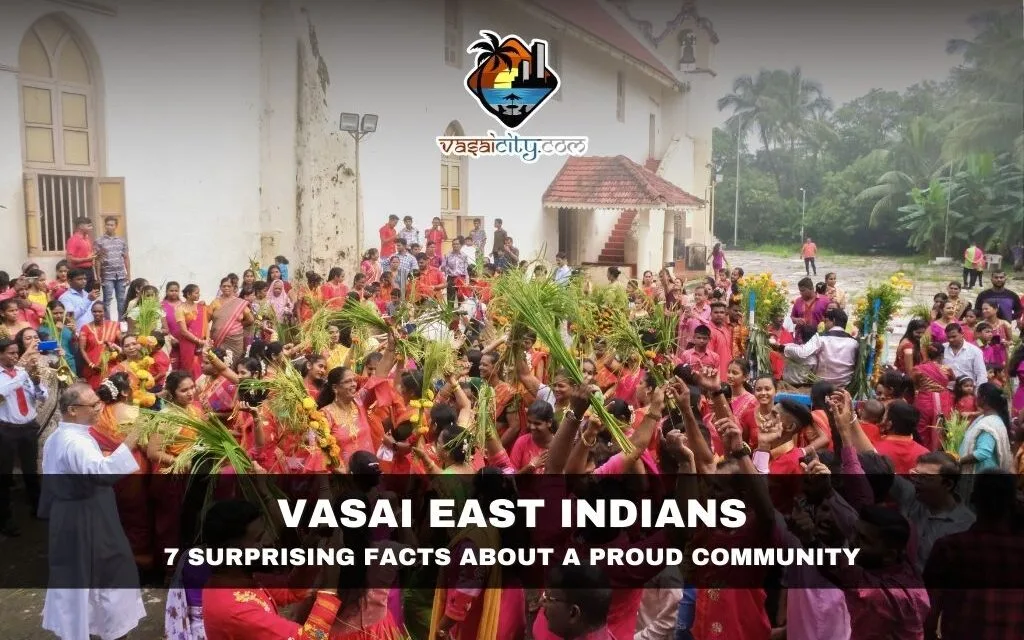
Village-based traditions remain central to the identity of the Vasai East Indians. Festivals, feasts, weddings, and religious processions often involve entire villages coming together. These events reinforce social bonds and help younger generations understand their heritage.
Groups such as the Vadvals emerged over time, further strengthening community identity. Even as Vasai becomes more urbanised, these traditions act as a cultural anchor for the Vasai East Indians.
Preserving Culture in a Rapidly Changing Vasai
With rapid development and an influx of diverse populations, preserving cultural heritage has become a challenge. Yet, the Vasai East Indians have shown remarkable resilience. Through language, food, faith, and community institutions, they continue to protect a way of life that has survived centuries of change.
Local heritage sites like the historic forts and churches of Vasai stand as reminders of this rich past. According to official records and heritage documentation by the Archaeological Survey of India, the Vasai region played a significant role in Maharashtra’s colonial and cultural history.
To explore more about Vasai’s historical roots, you can also read our detailed coverage on local heritage on VasaiCity.com: Discover the City.
A Living Legacy of Vasai
The story of the Vasai East Indians is not just about the past. It is a living, evolving legacy shaped by faith, resilience, and community spirit. As Vasai grows into a modern urban centre, the Vasai East Indians remain a powerful reminder of the region’s original identity and cultural depth.
Inputs by Biju Cherian
This article is based on the author’s research and perspectives. The publisher claims no responsibility for inaccuracies. Views expressed are the contributor’s alone. Institutions mentioned are not endorsed unless specified.