
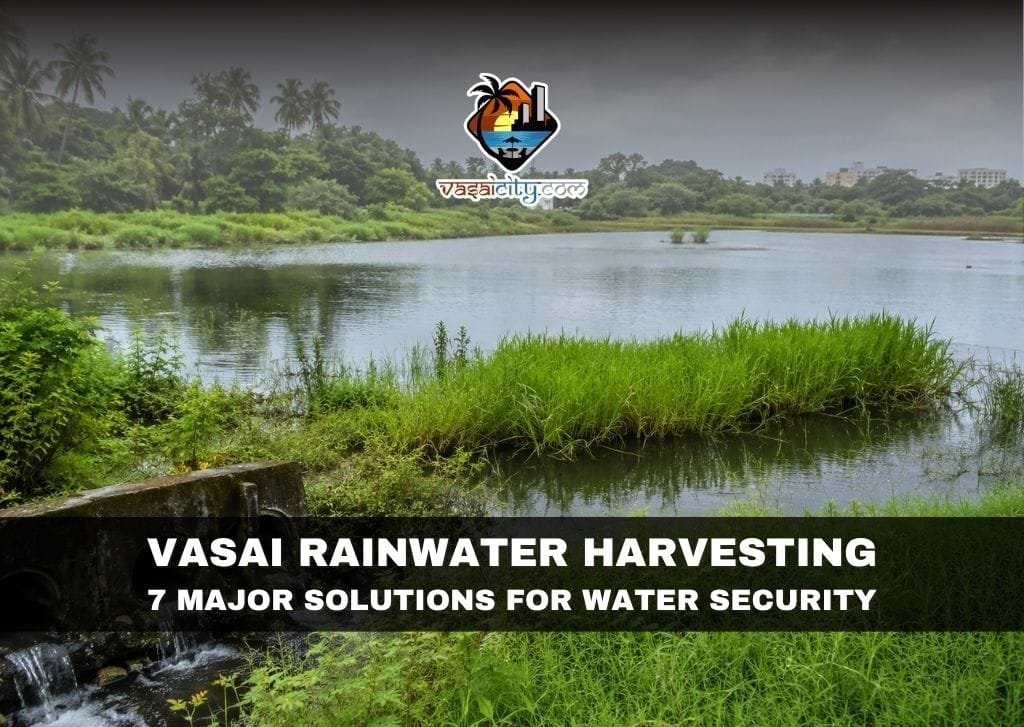
Every monsoon, Vasai Rainwater Harvesting becomes more relevant as thousands of litres of precious rainwater flow through drains and eventually into the Arabian Sea. While campaigns encouraging citizens to "Catch the Rain" raise awareness, the real challenge lies in ensuring that urban planning, engineering, and environmental conservation work together to retain as much rainwater as possible within the region.
For generations, Vasai was naturally designed to conserve water. Today, rapid urbanisation has altered that balance, making water conservation one of the area's most urgent environmental concerns.
Table of Contents
How Traditional Vasai Naturally Conserved Rainwater
Long before modern drainage systems existed, Vasai's natural landscape acted as one large rainwater harvesting network.
Dense forests, hills, paddy fields, wetlands, khar lands, ponds, bawkhals, natural springs, open soil, wells and seasonal streams worked together to slow down rainwater. Instead of rushing directly into rivers and the sea, water gradually seeped into the ground, replenishing underground aquifers.
This natural recharge system ensured that wells remained full for much of the year and groundwater stayed healthy, even during the dry summer months.
Nature itself served as the region's most efficient water storage system.
Urban Development Has Changed the Water Cycle
Over the past few decades, Vasai has witnessed rapid construction of roads, residential buildings, commercial complexes and extensive concrete drainage networks.
These developments are essential for supporting a growing population and reducing urban flooding. However, they have also significantly changed the way rainwater behaves.
Concrete surfaces prevent water from soaking into the soil. Modern stormwater drains are designed to move rainwater away as quickly as possible to avoid waterlogging. While this helps during heavy rainfall, it also means enormous quantities of freshwater leave the city before they can recharge underground water reserves.
As a result, a valuable natural resource is lost within hours of every major rainfall.
The Growing Challenge of Water Scarcity
Ironically, while millions of litres of rainwater are discharged into the sea during the monsoon, many residents experience water shortages during summer.
Across Vasai, falling groundwater levels have become increasingly noticeable. Several traditional wells no longer retain water throughout the year, and many localities depend heavily on tanker supplies whenever municipal water becomes insufficient.
This growing dependence highlights an important question: can Vasai retain more rainwater instead of allowing it to flow away immediately?
Experts in sustainable urban planning increasingly argue that the answer is yes.
Ecological Engineering Can Offer a Better Solution
Modern engineering and environmental conservation do not need to compete with each other.
A balanced approach can ensure that flood prevention and groundwater recharge happen simultaneously.
Smarter Drainage Systems
Instead of directing every drop of rainwater into concrete drains, strategically designed recharge points can allow water to seep into the ground before excess runoff enters the drainage network.
Such systems are already being implemented successfully in several Indian cities through recharge wells, infiltration pits, permeable pavements and bioswales.
These techniques help restore groundwater while maintaining effective flood management.
Protecting Natural Recharge Areas
The landscape itself plays a major role in water conservation.
Forests, wetlands, paddy fields, open laterite soil, natural ponds and bawkhals absorb significant quantities of rainwater. Preserving these ecosystems can dramatically improve groundwater recharge without requiring expensive infrastructure.
Protecting these natural assets should therefore be considered an essential component of future urban planning.
Vasai Rainwater Harvesting Should Go Beyond Rooftop Tanks
When people think about rainwater harvesting, rooftop collection systems usually come to mind.
While these systems are valuable, they represent only one part of the solution.
The largest rainwater harvesting system is the landscape itself.
Healthy forests, wetlands, agricultural land, natural ponds and open green spaces collectively recharge far greater quantities of groundwater than individual storage tanks can hold.
Urban planning that protects these natural recharge zones can produce long-term benefits for water security across the city.
A Sustainable Future Requires Better Planning
Climate change, population growth and rapid urbanisation are placing increasing pressure on water resources across India.
For Vasai, the challenge is not merely receiving enough rainfall—the region already receives abundant monsoon showers every year.
The challenge is retaining that rainfall.
Future development projects can incorporate ecological engineering principles that balance infrastructure needs with environmental sustainability.
Road construction, housing projects and drainage systems can all be designed to support groundwater recharge alongside flood management.
Such integrated planning benefits residents, agriculture, biodiversity and future generations alike.
Why Every Drop Matters
Every drop of rain that enters the ground today contributes to tomorrow's drinking water.
Groundwater recharge strengthens wells, supports agriculture, reduces dependence on water tankers and improves overall water security.
Allowing rainwater to recharge aquifers before it reaches rivers and ultimately the Arabian Sea can help create a more resilient Vasai.
The idea behind Vasai Rainwater Harvesting is simple: rain should not be viewed merely as excess water to be removed. It should be recognised as one of the city's most valuable natural resources.
As Vasai continues to grow, development and ecology must move forward together. A city that protects its forests, wetlands, paddy fields, natural ponds and recharge zones will be better equipped to face future water challenges.
If Vasai truly wants to "Catch the Rain," then every aspect of planning—from roads and drainage systems to environmental conservation—must help the earth capture every possible drop.
Because the rainwater that replenishes the aquifers today is the same water that will eventually reach taps, farms and communities tomorrow.
Inputs by Biju Cherian
This article is based on the author’s research and perspectives. The publisher claims no responsibility for inaccuracies. Views expressed are the contributor’s alone. Institutions mentioned are not endorsed unless specified.