
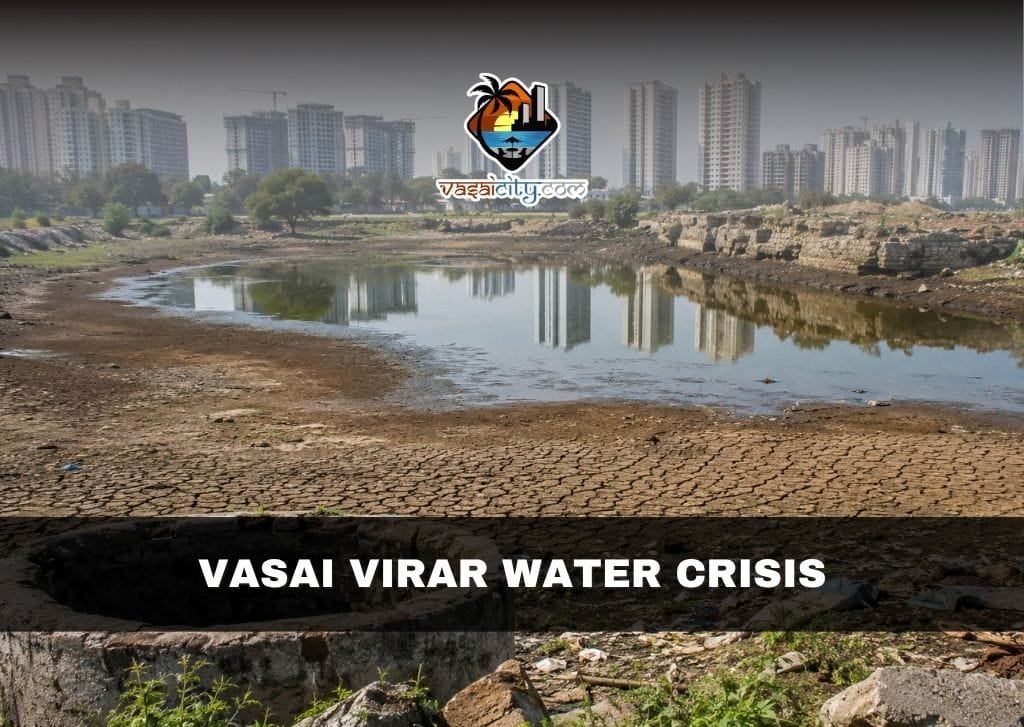
Vasai Virar Water Crisis is emerging as one of the most pressing challenges facing residents today. Rapid urban growth, increasing migration, disappearing natural water sources, and excessive groundwater extraction are pushing the city toward a potentially severe water shortage in the coming years.
For decades, Vasai-Virar has benefited from a network of traditional water sources such as wells, ponds, bawkhals (traditional water reservoirs), and borewells. These natural resources have played a crucial role in meeting daily water needs and maintaining groundwater levels. However, growing urbanization is putting these vital resources at risk.
Table of Contents
Vasai Virar Water Crisis Linked to Rapid Urban Development
The Vasai Virar Water Crisis has intensified due to the city's rapid expansion over the past few years. Large-scale residential construction, industrial development, and population growth have significantly increased water demand across the region.
While the municipal corporation continues to supply water through its official distribution network, the demand now far exceeds the available supply. Traditional water sources that once supported local communities are gradually disappearing under the pressure of development.
Experts warn that if these natural reserves are not protected, the city could face an even more severe water shortage in the future.
Disappearing Wells and Bawkhals Raise Concerns
One of the major contributors to the Vasai Virar Water Crisis is the destruction of traditional water bodies.
Many bawkhals are reportedly being filled during construction projects and road-widening activities. In several locations, wells have become dumping grounds for waste, making them unusable.
Historically, these water bodies served as important backup sources during periods of low rainfall or supply disruptions. Their loss not only reduces available water storage but also affects groundwater recharge.
Environmentalists believe preserving these traditional systems could significantly strengthen the city's water security.
Wetlands Play a Critical Role in Water Protection
Vasai is home to extensive salt pans and wetlands that act as natural barriers against seawater intrusion.
These environmentally sensitive areas prevent salty seawater from mixing with underground freshwater reserves. However, illegal land filling and unauthorized construction activities are increasingly threatening these ecosystems.
If these wetlands continue to shrink, experts fear that seawater could infiltrate freshwater aquifers, making groundwater unsuitable for drinking and domestic use.
The impact would be far-reaching and could worsen the Vasai Virar Water Crisis for thousands of residents.
Population Growth Is Outpacing Water Supply
The city's population has grown rapidly over the last decade. Many local observers believe the actual population is considerably higher than official records suggest.
Currently, Vasai-Virar receives approximately 400 million liters of water daily from Surya, Pelhar, and Usgaon dams. However, this supply is becoming increasingly inadequate when compared to rising demand.
As more residential complexes and commercial establishments emerge, pressure on the existing water infrastructure continues to grow.
Without long-term planning and additional water resources, the Vasai Virar Water Crisis may become more difficult to manage.
Climate Change and Reduced Rainfall Add to the Problem
Changing weather patterns are creating new challenges for water management.
Environmental experts point to reduced rainfall linked to climatic phenomena such as El Niño, along with higher temperatures that increase evaporation from reservoirs and lakes.
During drought-like conditions, traditional ponds, wells, and bawkhals can serve as emergency water reserves. Unfortunately, many of these resources are either neglected or already damaged.
Protecting and restoring these natural systems could help the city become more resilient to future climate-related water shortages.
Pollution Threatens Natural Water Sources
The Vasai Virar Water Crisis is not only about quantity but also about water quality.
In several areas, untreated wastewater from industrial units and residential settlements is reportedly being discharged into natural drains and creeks. This pollution threatens nearby water bodies and increases the risk of contamination.
As water quality deteriorates, the availability of safe drinking water declines, creating additional challenges for residents and local authorities.
Stronger monitoring and enforcement measures will be necessary to prevent further damage to the region's water resources.
Illegal Groundwater Extraction Fuels the Crisis
Many parts of Vasai-Virar still lack access to a reliable municipal water network. As a result, dependence on private water tankers has increased substantially.
To meet this demand, groundwater is often extracted at unsustainable levels. Environmentalists warn that excessive and illegal groundwater pumping can rapidly deplete underground reserves.
If current extraction rates continue unchecked, groundwater levels may fall dramatically, making future recovery difficult.
This issue has become a central concern in discussions surrounding the Vasai Virar Water Crisis.
Special Task Force Announced, But Questions Remain
Growing public concern over the destruction of bawkhals and natural water bodies has prompted action from authorities.
Local citizens and environmental organizations have repeatedly raised objections to the filling and encroachment of traditional water sources. In response, the administration has reportedly established a special task force involving both the Revenue Department and the municipal corporation.
The initiative is being viewed as a positive step. However, many residents remain skeptical about whether enforcement will be consistent and whether strict action will be taken against illegal encroachments and land-filling activities.
The success of this effort will largely depend on sustained monitoring and accountability.
Protecting Water Sources Is a Shared Responsibility
The Vasai Virar Water Crisis highlights a critical choice between uncontrolled development and sustainable growth.
Natural water resources cannot be replaced easily. If wells, wetlands, ponds, and bawkhals continue to disappear, future generations may face severe drinking water shortages regardless of how much money is spent on infrastructure.
Protecting these resources requires cooperation between government agencies, environmental groups, developers, and citizens. Conservation efforts today can help secure water availability for the future.