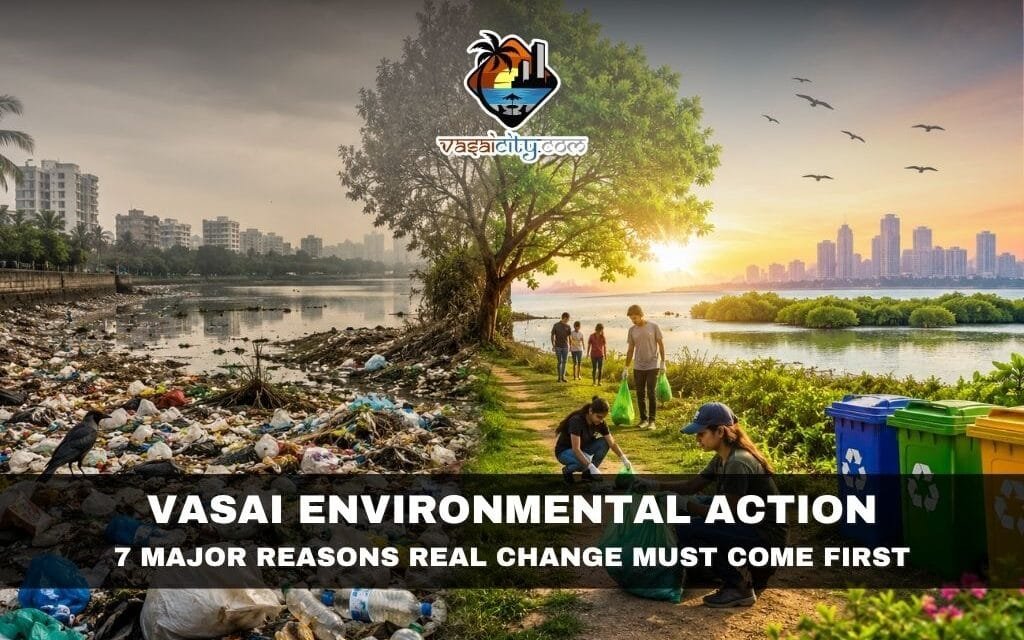
Vasai Environmental Action has become one of the most important conversations for residents who want a cleaner, greener, and healthier city. While awareness campaigns, murals, and public messages are positive initiatives, they cannot replace meaningful environmental reforms that solve the real problems affecting Vasai every day.
Across the city, citizens have repeatedly shown that they appreciate genuine efforts towards environmental conservation. Vasaikars have always welcomed innovative waste management initiatives, community clean-up drives, and projects that protect the region’s natural beauty. However, many residents believe that visible action on the ground should always take priority over promotional campaigns.
The discussion today is not about whether awareness campaigns are useful – they certainly are. The bigger question is whether enough is being done to address the environmental challenges that continue to impact Vasai’s roads, rivers, beaches, wetlands, and residential neighbourhoods.
Table of Contents
Why Vasai Environmental Action Needs Practical Solutions
Creating awareness is important, but awareness alone cannot eliminate overflowing garbage, polluted water bodies, or illegal dumping. Successful environmental management requires planning, execution, monitoring, and strict enforcement.
Across India, several cities have demonstrated that sustainable environmental improvement is possible when governments and citizens work together.
Indore’s Cleanliness Success
Indore consistently earned recognition as India’s cleanest city through disciplined waste segregation, efficient collection systems, public participation, and continuous monitoring. Its success was not achieved through advertising alone but through years of systematic planning and implementation.
Ambikapur’s Recycling Revolution
Ambikapur in Chhattisgarh transformed its waste management system by empowering women-led recycling centres. Waste became an opportunity for employment while significantly reducing landfill dependency. The city’s model demonstrated how environmental responsibility can also create social and economic benefits.
Learning from Other Environmentally Responsible States
States such as Meghalaya, Sikkim, and Himachal Pradesh have shown that protecting forests, rivers, and fragile ecosystems requires long-term commitment rather than temporary campaigns.
These examples illustrate that lasting environmental improvements come from consistent policies, public cooperation, and administrative accountability.
The Real Challenges Facing Vasai Environmental Action
Vasai is blessed with beaches, wetlands, rivers, mangroves, khazan lands, and green hills that make the region environmentally unique. Unfortunately, many of these natural assets continue to face growing pressure.
Several environmental concerns remain visible across different parts of the city.
Plastic Pollution
Plastic waste continues to accumulate on roads, public spaces, beaches, rivers, and open fields. Single-use plastics frequently clog drains and contribute to flooding during the monsoon season.
Reducing plastic pollution requires stronger enforcement, better collection systems, and increased public participation.
Illegal Debris Dumping
Construction debris dumped illegally on open land, wetlands, and roadsides continues to damage the local environment.
Strict monitoring, heavy penalties, and faster removal mechanisms are essential to discourage such practices.
Protection of Wetlands and Khazan Lands
Vasai’s wetlands and khazan lands play an important role in flood control, biodiversity, groundwater recharge, and ecological balance.
Protecting these natural resources should remain a priority under every Vasai Environmental Action initiative.
Waste Segregation at Source
One of the biggest improvements needed is effective segregation of waste at household and commercial levels.
When biodegradable and recyclable waste are mixed together, recycling becomes difficult while landfill volumes continue to increase.
Segregation at source is considered one of the most effective steps in modern waste management systems.
Composting and Recycling
Organic waste represents a large portion of municipal garbage.
Neighbourhood composting centres and improved recycling infrastructure can significantly reduce the amount of waste reaching dumping grounds while producing useful compost for gardens and agriculture.
Sewage Treatment
Untreated sewage entering rivers and creeks affects water quality and damages aquatic ecosystems.
Investment in sewage treatment infrastructure remains a critical part of sustainable Vasai Environmental Action.
Ward-Level Waste Management
Every ward has unique waste management challenges.
Decentralised planning, regular monitoring, and greater accountability at the ward level can improve collection efficiency and cleanliness across the city.
Awareness Campaigns Should Support Action—Not Replace It
Public awareness campaigns have an important role in encouraging responsible behaviour among citizens. Educational programmes, school initiatives, street art, and environmental messaging can inspire people to participate in keeping their surroundings clean.
However, awareness campaigns deliver the best results only when supported by effective implementation.
Citizens expect visible improvements such as cleaner roads, better waste collection, protected wetlands, functioning sewage systems, and stricter action against violations.
Without these foundational measures, publicity risks becoming symbolic rather than transformational.
Building a Cleaner Vasai Requires Shared Responsibility
Environmental conservation cannot depend entirely on government agencies.
Residents, housing societies, schools, businesses, environmental organisations, and local authorities all have important roles to play.
Simple everyday actions can make a measurable difference:
- Segregate waste at home.
- Reduce the use of single-use plastics.
- Participate in community clean-up drives.
- Report illegal dumping activities.
- Protect mangroves, wetlands, and public spaces.
- Encourage composting wherever possible.
- Support responsible recycling initiatives.
When citizens actively participate, environmental programmes become more effective and sustainable.
Vasai Environmental Action Must Focus on Long-Term Results
A city’s environmental reputation is built through consistent outcomes rather than promotional visibility.
People remember cities for their clean streets, healthy rivers, protected natural habitats, and efficient civic systems—not for the number of banners, posters, or publicity campaigns.
For Vasai, meaningful environmental leadership will be reflected through:
- Cleaner neighbourhoods
- Plastic-free public spaces
- Protected wetlands and mangroves
- Efficient waste segregation
- Scientific waste processing
- Better sewage management
- Strong environmental enforcement
- Greater public participation
These are the indicators that create lasting public confidence.
The Road Ahead for Vasai Environmental Action
Vasai possesses tremendous natural wealth that deserves careful protection for future generations.
Residents have consistently demonstrated their willingness to support environmental initiatives that produce genuine results. Awareness campaigns can certainly encourage participation, but they should complement—not replace—comprehensive planning, strong enforcement, and accountable governance.
True environmental leadership is reflected in cleaner surroundings, healthier ecosystems, well-managed waste systems, and the preservation of the natural landscapes that define Vasai’s identity.
Ultimately, Vasai Environmental Action will be judged not by promotional efforts, but by visible improvements experienced by every resident in their daily lives.
Inputs by Biju Cherian
This article is based on the author’s research and perspectives. The publisher claims no responsibility for inaccuracies. Views expressed are the contributor’s alone. Institutions mentioned are not endorsed unless specified.