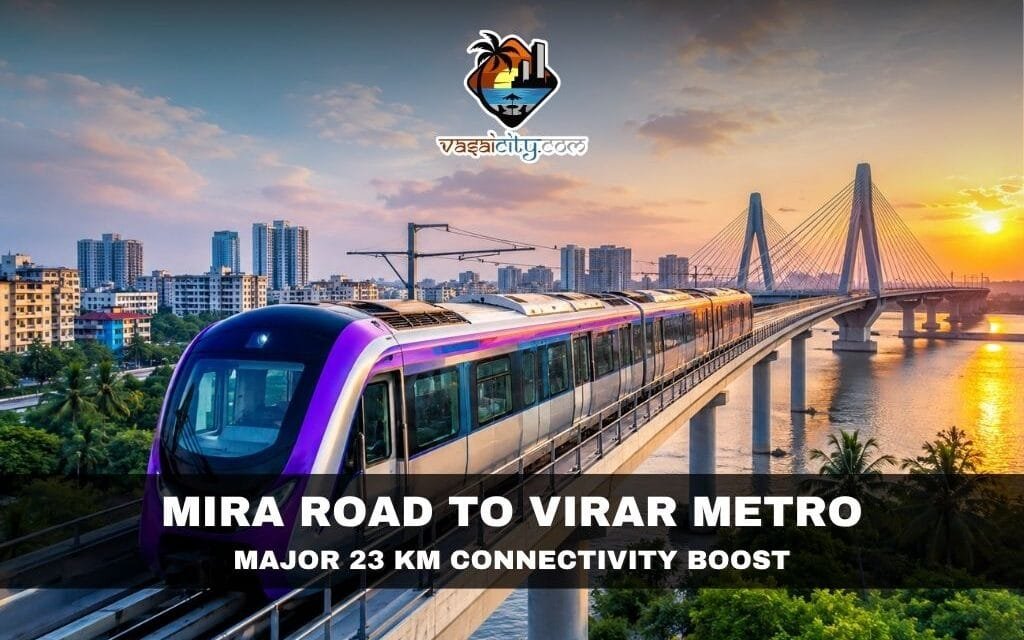
The Mira Road to Virar Metro is moving closer to reality, bringing exciting news for lakhs of daily commuters across Vasai-Virar and Mira-Bhayandar. The ambitious Metro Line 13 project is expected to significantly improve public transport, reduce travel time, and strengthen connectivity with Mumbai’s growing metro network.
For years, residents have relied heavily on the overcrowded Western Railway suburban network and traffic-clogged highways. The upcoming Mira Road to Virar Metro aims to offer a faster, safer, and more reliable alternative, making everyday travel much more convenient.
Table of Contents
What is the Mira Road to Virar Metro Project?
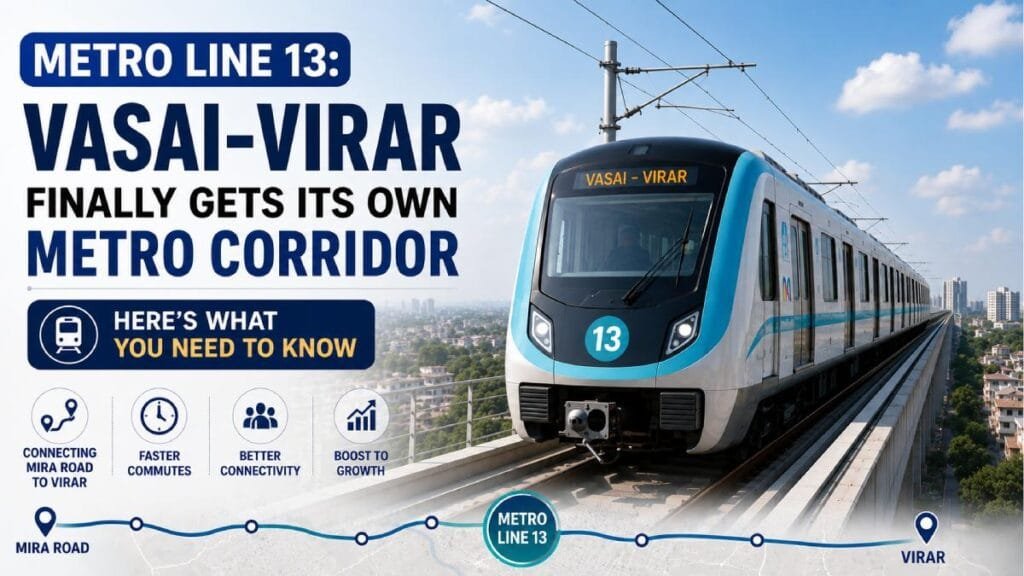
The Mira Road to Virar Metro, officially known as Mumbai Metro Line 13 (Purple Line), is one of the Mumbai Metropolitan Region’s most significant upcoming infrastructure projects.
Planned by the Mumbai Metropolitan Region Development Authority (MMRDA), the metro corridor will stretch approximately 23 kilometres from Shivaji Chowk in Mira Road to Virar, covering more than 20 stations along its route.
Recognising the growing demand for efficient public transportation in the northern suburbs, MMRDA has reportedly allocated ₹6,900 crore towards the development of this crucial corridor.
The project is expected to seamlessly connect Mira-Bhayandar, Vasai, Nalasopara, and Virar while integrating with Mumbai’s expanding metro network.
Why the Mira Road to Virar Metro Matters
The Mira Road to Virar Metro is much more than another metro corridor. It represents a long-awaited solution for one of the busiest commuting regions in the Mumbai Metropolitan Region.
Every day, thousands of passengers travel between Virar, Vasai, Nalasopara, Mira Road, and Mumbai using the Western Railway line. Peak-hour overcrowding has become a major concern for commuters.
Once operational, the metro is expected to:
- Reduce dependence on overcrowded suburban trains.
- Ease congestion on the Western Express Highway and National Highway.
- Provide predictable travel times.
- Offer safer and more comfortable public transport.
- Improve connectivity between residential and commercial hubs.
The project is also expected to support future urban development in rapidly expanding suburbs.
Key Features of Metro Line 13
The proposed Mira Road to Virar Metro includes several notable infrastructure developments that are expected to reshape regional mobility.
23 km Elevated Metro Corridor
The metro corridor will extend for around 23 kilometres, connecting major residential and commercial areas across Mira-Bhayandar and Vasai-Virar.
More Than 20 Stations
With over 20 proposed stations, residents will have easier access to metro services without depending entirely on road transport.
Vasai Creek Road-cum-Rail Bridge
One of the most important engineering highlights of the project is the proposed road-cum-rail bridge across Vasai Creek.
This bridge will carry both metro services and road traffic, improving connectivity between Mira Road and Virar while reducing travel bottlenecks.
The structure is also being designed with modern earthquake-resistant engineering standards, enhancing long-term safety.
Connection to Uttan–Virar Sea Link
The metro bridge will integrate with the proposed Uttan–Virar Sea Link, creating another major transport corridor connecting Mumbai’s northern suburbs.
Together, these projects are expected to dramatically improve regional accessibility for both commuters and businesses.
Current Status of the Mira Road to Virar Metro
The Mira Road to Virar Metro has entered the planning and survey phase.
According to available project updates, the Delhi Metro Rail Corporation (DMRC) is currently conducting surveys for the alignment and related technical assessments.
Before construction begins, authorities will complete:
- Land acquisition
- Environmental approvals
- Statutory clearances
- Detailed engineering studies
Following these approvals, full-scale construction is expected to commence.
MMRDA has prioritised this corridor because of its strategic importance to the rapidly growing northern suburbs of Mumbai.
Multiple Interchange Opportunities
One of the biggest advantages of the Mira Road to Virar Metro will be its integration with Mumbai’s expanding metro network.
Passengers travelling from Vasai-Virar will eventually be able to connect with several metro corridors, allowing smoother travel towards Mumbai’s business districts without relying solely on local trains.
The improved network connectivity is expected to significantly reduce journey times for office-goers, students, and daily commuters.
Economic Growth for Vasai-Virar
Infrastructure projects often become catalysts for economic development, and the Mira Road to Virar Metro is expected to have a similar impact.
Improved connectivity generally encourages:
- Residential development
- Commercial investments
- Retail expansion
- Employment generation
- Better access to educational institutions
- Increased business opportunities
Real estate experts believe improved transport infrastructure often enhances property values while attracting new businesses to developing suburbs.
For Vasai-Virar and Mira-Bhayandar, this metro corridor could become one of the biggest drivers of long-term urban growth.
Better Quality of Life for Daily Commuters
The biggest beneficiaries of the Mira Road to Virar Metro will undoubtedly be daily commuters.
Today, many residents spend several hours travelling to workplaces across Mumbai because of overcrowded trains and road congestion.
The metro is expected to provide:
- Faster travel
- Reduced commuting stress
- Air-conditioned transport
- Reliable schedules
- Improved last-mile connectivity
These improvements can significantly enhance the daily commuting experience for thousands of families living in the region.
International Support Strengthens the Project
The Mira Road to Virar Metro has also received support from international funding agencies, including the Japan International Cooperation Agency (JICA).
Such collaboration reflects the importance of developing sustainable public transportation infrastructure within the Mumbai Metropolitan Region.
International partnerships often help bring advanced engineering expertise and financing support for large-scale infrastructure projects.
A New Era for Vasai-Virar Connectivity
The Mira Road to Virar Metro has the potential to redefine mobility across the northern suburbs of Mumbai.
With a 23-kilometre corridor, more than 20 stations, a landmark bridge across Vasai Creek, and future integration with other metro lines, the project promises to ease congestion while supporting economic growth and urban development.
Although surveys, approvals, and land acquisition are still underway, the project represents a major step towards creating a modern and efficient public transport system for the rapidly growing Vasai-Virar region.
Residents who have long awaited better connectivity may soon witness one of the most significant transportation upgrades in the area’s history.
Inputs by Biju Cherian
This article is based on the author’s research and perspectives. The publisher claims no responsibility for inaccuracies. Views expressed are the contributor’s alone. Institutions mentioned are not endorsed unless specified.