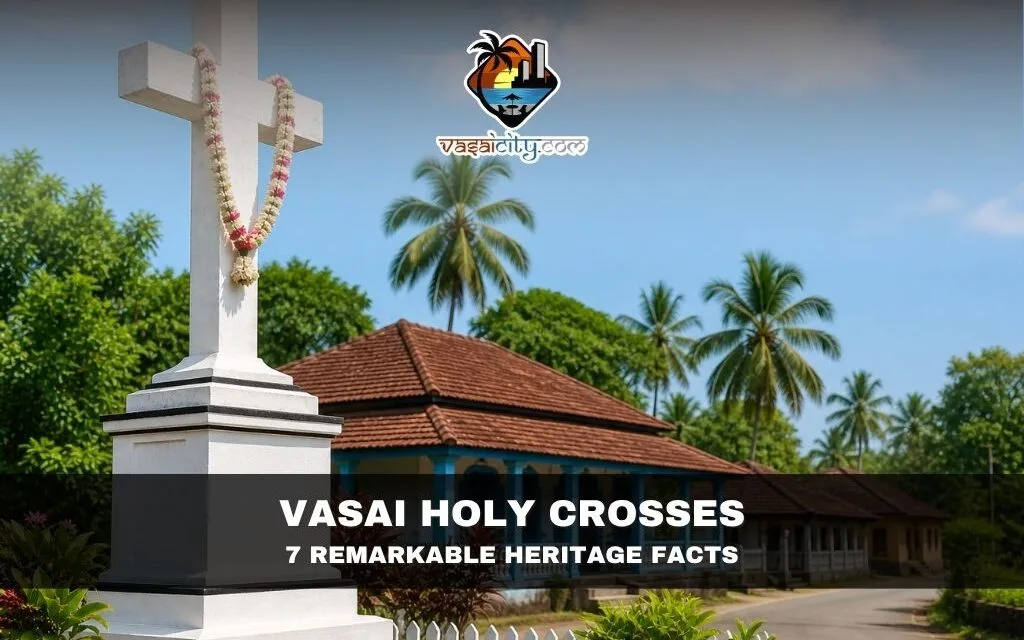
Vasai Holy Crosses are a timeless symbol of faith, culture, and identity deeply rooted in the region’s East Indian Catholic communities. Found across almost every gaothan (village settlement) in Vasai, these crosses are more than just religious structures—they represent history, unity, and tradition that have been preserved for generations.
Table of Contents
The Cultural Significance of Vasai Holy Crosses
The presence of Vasai Holy Crosses in local villages highlights their importance in everyday life. For decades – and in some cases, centuries – these crosses have stood as silent witnesses to the evolution of Vasai’s communities. They are not only religious landmarks but also serve as cultural anchors that bring people together.
One of the most cherished traditions associated with these crosses is the annual Cross feast. During these gatherings, villagers come together to recite the Holy Rosary, strengthening their spiritual connection while also reinforcing community bonds. These events are filled with devotion, warmth, and a strong sense of belonging.
Community Gatherings and Traditions
The celebrations around Vasai Holy Crosses are simple yet meaningful. After prayers, it is common for villagers to share light refreshments and soft drinks. These small gestures create opportunities for people to interact, reconnect, and celebrate their shared heritage.
In today’s fast-paced world, such gatherings play an important role in maintaining community harmony. They serve as reminders of a time when life was slower, and relationships were nurtured through regular social interaction.
Historical Roots and Heritage Value
The history of Vasai Holy Crosses dates back several generations. Many of these crosses were originally erected during times of crisis, particularly to protect villages from deadly plagues. Over time, they became symbols of hope, faith, and resilience.
Because of their historical significance, these crosses hold immense heritage value. They tell stories of the past – of struggles faced by earlier generations and the faith that helped them overcome hardships. Preserving these structures means preserving a part of Vasai’s identity.
Landmarks of Identity
Before modern navigation systems and urban development, Vasai Holy Crosses served a practical purpose as well. Most of them were strategically placed along roadsides or at village entrances, acting as markers that identified specific communities.
For residents, these crosses were not just physical landmarks but emotional ones too. They symbolized home, belonging, and cultural pride—values that continue to resonate even today.
Changing Times and the Need for Preservation
With rapid urbanization and migration, many traditional villages in Vasai are undergoing significant changes. As people move away and lifestyles evolve, the responsibility of maintaining these historic crosses often falls on fewer hands.
Unfortunately, some Vasai Holy Crosses are now in need of urgent restoration. Exposure to weather conditions, neglect, and lack of awareness have put several of these heritage structures at risk.
According to guidelines from heritage conservation authorities such as the Archaeological Survey of India (ASI), preserving local cultural landmarks is essential for maintaining historical continuity.
A Legacy Older Than the State
An interesting aspect of Vasai Holy Crosses is that their tradition predates the formation of the state of Maharashtra itself. This highlights how deeply rooted these practices are in the region’s history.
For the East Indian Catholic community, these crosses are not just religious icons – they are living symbols of a legacy passed down through generations. They reflect a unique blend of faith, culture, and history that sets Vasai apart.
Why Preservation Matters Today
Preserving Vasai Holy Crosses is not just about maintaining old structures – it is about safeguarding a way of life. These crosses represent stories, memories, and traditions that define the identity of the local community.
Efforts must be made by residents, local authorities, and heritage organizations to restore and protect these landmarks. Community participation, awareness campaigns, and proper maintenance can ensure that future generations continue to experience their significance.
For more local heritage stories, you can also read: https://www.vasaicity.com/discover-the-city
Conclusion
Vasai Holy Crosses stand as enduring symbols of faith, unity, and history. From their origins as protective structures during difficult times to their role as cultural and social gathering points, they continue to hold a special place in the hearts of Vasai’s residents.
As modernization continues to reshape the region, preserving these crosses becomes even more important. They are not just relics of the past—they are living reminders of Vasai’s rich cultural heritage and the strong community spirit that defines it.
Inputs by Biju Cherian
This article is based on the author’s research and perspectives. The publisher claims no responsibility for inaccuracies. Views expressed are the contributor’s alone. Institutions mentioned are not endorsed unless specified.