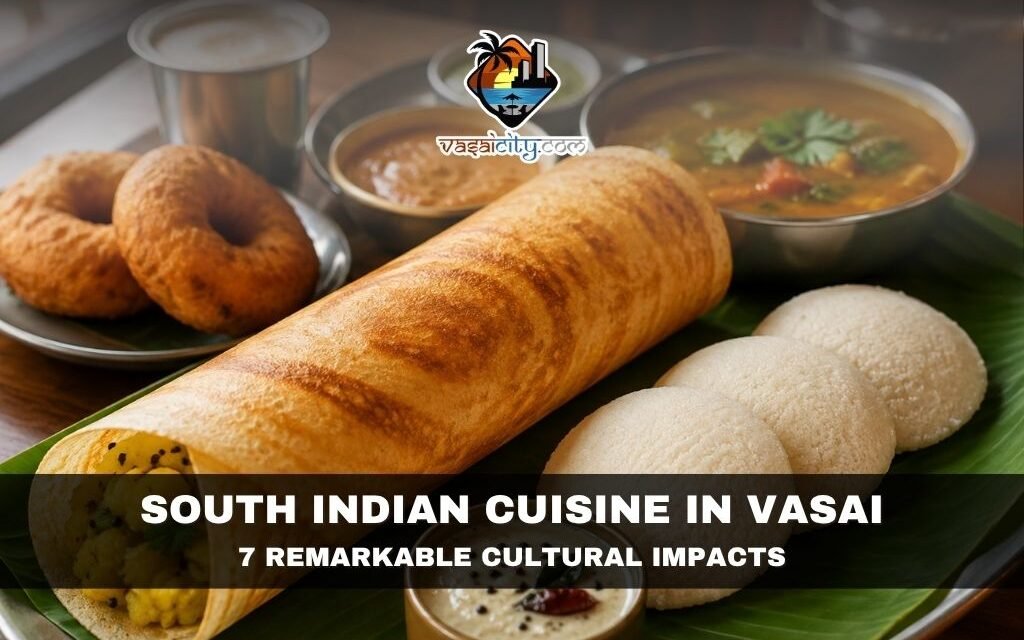
South Indian Cuisine in Vasai has become much more than a culinary tradition—it is now an essential part of the city’s identity. From humble Udupi cafés near Vasai railway station to modern restaurants spread across the region, South Indian food has shaped the everyday eating habits of thousands of residents.
Vasai has witnessed remarkable transformations throughout its history. Once home to Koli fishing settlements, it later came under the rule of the Mughals, became an important Portuguese capital, served as a strategic location during the Maratha period, and eventually developed into a thriving suburban region. Amid these historical changes, one of the most influential cultural contributions came through the arrival of the South Indian community during the 20th century.
Their influence extended far beyond migration—it permanently transformed Vasai’s culinary landscape.
Table of Contents
How South Indian Cuisine in Vasai Became Popular
The growth of South Indian Cuisine in Vasai closely followed the settlement of South Indian families, particularly around Vasaigaon and the railway station. As more families established themselves in the area, they introduced authentic home-style recipes that quickly gained popularity among local residents.
One of the driving forces behind this culinary revolution was the entrepreneurial spirit of the Shetty community. They established traditional Udupi cafés that became popular destinations for affordable, hygienic, and delicious meals.
These eateries introduced locals to dishes such as:
- Soft idlis
- Crispy dosas
- Medu vadas
- Uttapams
- Sambhar
- Coconut chutney
Over time, these dishes evolved from being regional specialties into everyday comfort food enjoyed across Vasai.
The Rise of Udupi Cafés Across Vasai
The success of early cafés encouraged many entrepreneurs to expand their hospitality businesses across the entire Vasai Taluka.
Small family-run establishments gradually grew into well-known restaurants, making South Indian Cuisine in Vasai easily accessible to people from every community.
These cafés became more than food outlets—they served as social gathering spaces where students, office workers, families, and travellers could enjoy affordable meals throughout the day.
Even today, many long-time residents fondly remember the classic Udupi restaurants that once dominated the streets near Vasai station.
Fermented Foods Became Part of Everyday Life
One of the biggest contributions of South Indian Cuisine in Vasai was introducing the art of fermentation to everyday cooking.
Traditional recipes such as idli and dosa require naturally fermented batter, a cooking technique that enhances flavour while improving digestibility and nutritional value.
As these foods became increasingly popular, local Maharashtrian and Gujarati households also started preparing idlis and dosas at home.
Soon, fermentation was no longer seen as an unfamiliar cooking process—it became a regular part of kitchens across Vasai.
This cultural exchange demonstrated how food has the power to connect communities beyond language and regional identity.
A Culinary Journey from Kanyakumari to Vasai
The spread of South Indian cuisine followed the western coastline of India, travelling from Kanyakumari in Tamil Nadu through Karnataka and Maharashtra before becoming deeply rooted in Palghar district.
Vasai naturally became one of the important destinations where this culinary heritage flourished.
Generations of migrants carried with them recipes, cooking traditions, hospitality values, and family businesses that gradually became woven into the local culture.
Today, many residents enjoy South Indian breakfast without necessarily associating it with migration history—a testament to how deeply these traditions have been embraced.
The Legacy Lives On
In recent years, many South Indian families have moved to other parts of the Mumbai Metropolitan Region. However, their cultural influence remains firmly embedded in Vasai.
The recipes they introduced continue to be prepared in homes, schools, restaurants, and cafés across the city.
Idli, dosa, sambhar, and other fermented delicacies have become staples that transcend regional identities.
The success of South Indian Cuisine in Vasai is not merely a story about food. It reflects how migration enriches communities, encourages cultural exchange, and leaves lasting traditions that continue for generations.
As Vasai continues to grow into a diverse urban centre, the city’s food culture stands as a reminder that some of its strongest identities have been built around shared meals and shared experiences.
Whether enjoyed at a neighbourhood café or prepared in a family kitchen, South Indian dishes remain an enduring symbol of Vasai’s multicultural heritage.
For more stories about Vasai’s history and culture, visit VasaiCity.com’s – Discover The City.