
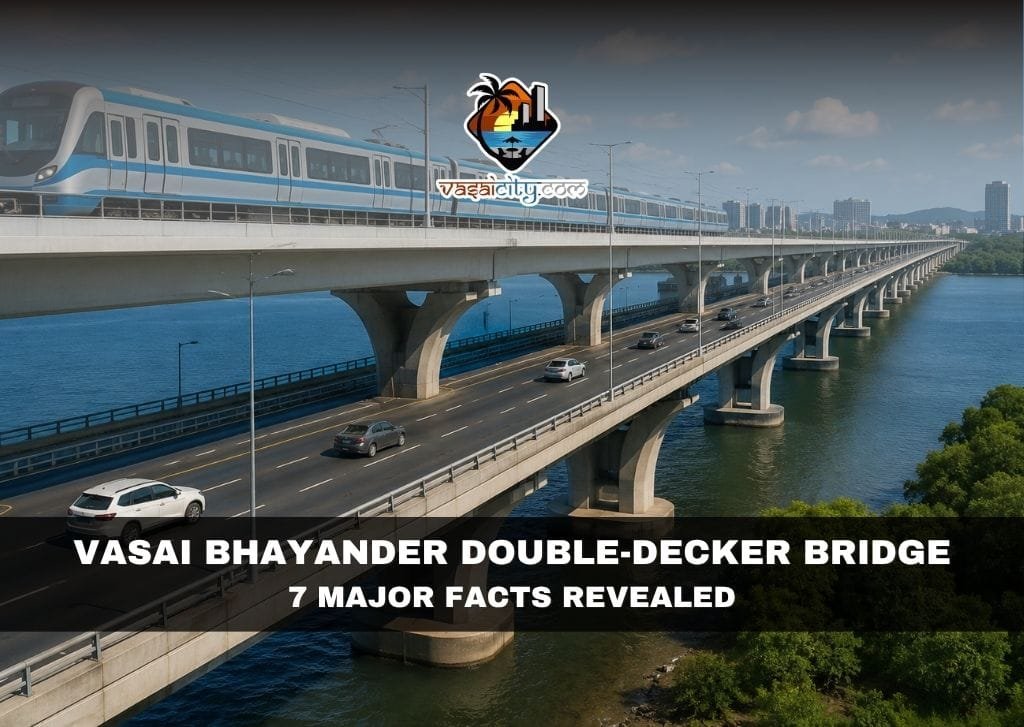
Daily commuting between Vasai and Bhayander has long been a challenge for thousands of residents. The Vasai Bhayander Double-Decker Bridge is an ambitious infrastructure project that aims to address traffic congestion, improve connectivity, and provide a faster, more reliable transport network for the region.
Once completed, the project is expected to become Maharashtra's first double-decker bridge, combining a metro corridor with a six-lane road on a single structure. While the proposal has generated significant excitement among commuters, the project is still in its planning phase and awaits key environmental clearances before construction can begin.
Table of Contents
What is the Vasai Bhayander Double-Decker Bridge?
The Vasai Bhayander Double-Decker Bridge is a proposed multi-level transport corridor designed to improve connectivity between Vasai and Bhayander in the Mumbai Metropolitan Region (MMR).
The bridge will stretch approximately 5 kilometres and measure nearly 30 metres in width. Unlike conventional bridges, it will feature two levels serving different modes of transport.
The upper deck will carry the proposed Metro Line 13, while the lower deck will accommodate a six-lane express roadway, allowing vehicles to travel efficiently between the two rapidly growing cities.
If completed as planned, the project could significantly reduce travel time for thousands of daily commuters.
Key Features of the Vasai Bhayander Double-Decker Bridge
The Vasai Bhayander Double-Decker Bridge has several features that make it one of Maharashtra's most ambitious transport projects.
Maharashtra's First Double-Decker Bridge
The project is expected to become the state's first bridge integrating both metro rail and road traffic on a single structure.
This innovative approach allows better utilisation of space while improving overall transportation capacity.
Metro Line 13 on the Upper Level
The upper portion of the bridge is planned to carry Metro Line 13, providing a modern public transport option between Vasai and Bhayander.
The metro is expected to reduce dependence on overcrowded suburban trains while offering faster and more comfortable travel.
Six-Lane Express Road Below
The lower deck will consist of a six-lane express road, helping ease congestion on existing routes.
Motorists travelling between Vasai and Bhayander could experience shorter travel times once the corridor becomes operational.
First Road Link to Panju Island
One of the most significant benefits of the project is the creation of the first direct road connection to Panju Island.
More than 3,500 residents living on the island are expected to gain improved year-round connectivity, making travel for work, education and healthcare considerably easier.
How the Vasai Bhayander Double-Decker Bridge Could Benefit the Region
Reduced Traffic Congestion
Roads connecting Vasai and Bhayander often witness heavy congestion, especially during peak hours.
The Vasai Bhayander Double-Decker Bridge aims to distribute traffic more efficiently by offering an additional high-capacity transport corridor.
Relief for Overcrowded Local Trains
The Western Railway suburban network carries lakhs of passengers every day.
The introduction of Metro Line 13 through the Vasai Bhayander Double-Decker Bridge could provide commuters with an alternative mode of transport, reducing pressure on existing railway services.
Economic Growth
Large infrastructure projects typically encourage commercial development.
Improved connectivity can attract businesses, create employment opportunities, increase property values and support local economic growth across Vasai, Bhayander and neighbouring areas.
Better Regional Connectivity
The bridge is expected to strengthen transport links within the Mumbai Metropolitan Region by integrating road and metro infrastructure into a single corridor.
Environment-Friendly Engineering Approach
According to the project proposal, the Vasai Bhayander Double-Decker Bridge will use a single-pillar structural system.
This design aims to minimise the environmental footprint by reducing the number of supporting columns required within sensitive areas.
However, environmental assessments remain a crucial part of the approval process before construction can proceed.
Current Status of the Project
Although public interest in the Vasai Bhayander Double-Decker Bridge remains high, it is important to understand where the project currently stands.
The proposal received approval in July 2024 and has entered the planning and design stage.
At present:
- Environmental clearances are still pending.
- Funding arrangements are yet to be fully finalised.
- Physical construction has not yet started.
- Detailed project planning continues.
Residents should therefore note that no construction timeline has been officially announced.
Who Will Execute the Project?
The project is proposed to be executed by the Delhi Metro Rail Corporation (DMRC), an organisation with extensive experience in planning and implementing metro rail systems across India.
Its involvement is expected to bring technical expertise to both the metro and integrated transport components of the project.
Why This Project Matters for Vasaikars
Infrastructure has played an important role in shaping the growth of Vasai over the past decade.
As the city's population continues to rise, demand for better transport infrastructure has become increasingly urgent.
The Vasai Bhayander Double-Decker Bridge represents more than just another road project. It proposes an integrated transport solution that could improve mobility, reduce travel stress and support long-term urban development.
However, residents should also recognise that the project remains subject to statutory approvals, funding availability and construction schedules before work begins on the ground.
If implemented successfully, it has the potential to become one of the most significant infrastructure developments in the Vasai–Bhayander region.
Conclusion
The Vasai Bhayander Double-Decker Bridge has the potential to redefine travel between Vasai and Bhayander by combining metro rail and road transport within a single modern structure.
While the proposal offers several promising benefits—including reduced congestion, improved public transport, better connectivity to Panju Island and stronger economic prospects—the project is currently in its planning stage. Environmental approvals, financial closure and construction timelines will determine how soon residents can experience these improvements.
For now, the project remains one of the most closely watched infrastructure developments in the region.
Inputs by Biju Cherian
This article is based on the author’s research and perspectives. The publisher claims no responsibility for inaccuracies. Views expressed are the contributor’s alone. Institutions mentioned are not endorsed unless specified.