
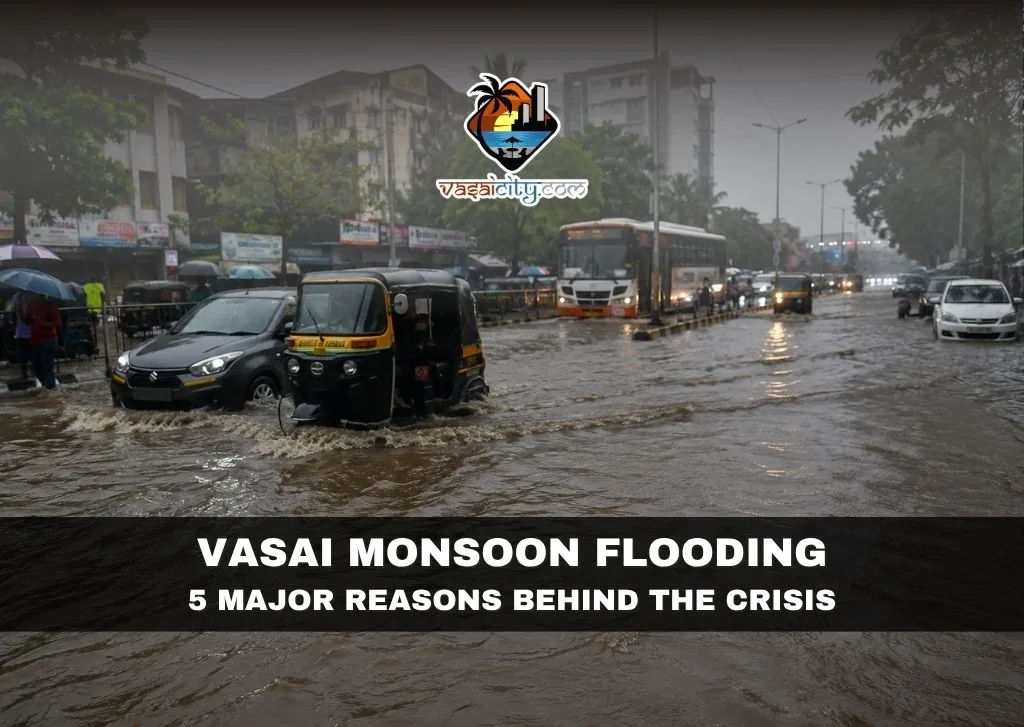
Vasai Monsoon Flooding has once again brought daily life to a standstill, with heavy overnight rainfall inundating roads, disrupting train services, and causing severe traffic congestion across the city.
Residents woke up to waterlogged streets, delayed commutes, and flooded neighbourhoods after several areas received intense rainfall within a short span. While monsoon showers are a regular part of life in the region, the scale of disruption has once again raised serious concerns about the city's preparedness for extreme weather.
Table of Contents
What Triggered the Latest Vasai Monsoon Flooding?
According to meteorologists, the recent spell of heavy rainfall was caused by the interaction of three powerful monsoon weather systems operating simultaneously.
A cyclonic circulation near the western coast, a mid-level atmospheric trough, and a strong offshore trough over the Arabian Sea combined to pull massive amounts of moisture towards the region. The result was an intense burst of rainfall that overwhelmed several parts of Vasai within hours.
Weather experts note that such rare atmospheric combinations can significantly increase rainfall intensity, particularly during peak monsoon months.
However, while these weather systems explain why the rain was so heavy, they do not fully explain why Vasai Monsoon Flooding continues to occur year after year.
The Bigger Question: Why Does Vasai Flood Every Monsoon?
The recurring nature of Vasai Monsoon Flooding points to challenges that go beyond weather patterns.
Every rainy season, the city experiences similar scenes—submerged roads, overflowing drains, stalled vehicles, and frustrated commuters. This raises an important question: Is the problem solely due to heavy rainfall, or are deeper urban issues making the situation worse?
Many urban planners and environmental experts believe the answer lies in a combination of infrastructure limitations and rapid urban development.
Drainage Infrastructure Under Pressure
One of the most frequently discussed concerns during Vasai Monsoon Flooding is the city's drainage network.
As urban populations grow and construction activity increases, drainage systems often struggle to handle large volumes of rainwater. When rainfall exceeds the designed capacity of stormwater drains, water begins accumulating on roads and residential areas.
Residents in several low-lying localities have repeatedly reported recurring waterlogging, indicating that existing infrastructure may require significant upgrades to cope with modern rainfall patterns.
Impact of Rapid Urbanisation
Over the last decade, Vasai has witnessed substantial residential and commercial development.
While growth has brought economic opportunities and improved connectivity, it has also increased pressure on natural drainage channels. Open land that once absorbed rainwater has gradually been replaced by concrete surfaces such as roads, buildings, parking areas, and pavements.
This process, known as concretisation, reduces the ground's ability to absorb water naturally. As a result, rainwater flows rapidly into drainage systems, increasing the risk of Vasai Monsoon Flooding.
Disappearing Natural Waterways
Historically, creeks, ponds, wetlands, and natural streams played a vital role in managing excess rainwater.
Many environmental groups argue that shrinking water bodies and encroachments on natural drainage paths have reduced the city's ability to handle heavy monsoon rainfall.
When these natural channels are blocked or narrowed, rainwater has fewer routes to escape, leading to faster accumulation in residential and commercial areas.
Waste Management and Blocked Drains
Another factor frequently linked to Vasai Monsoon Flooding is waste accumulation.
Plastic waste, debris, and other solid materials often find their way into drainage networks. During periods of intense rainfall, blocked drains can significantly reduce water flow and worsen flooding.
Municipal authorities typically conduct pre-monsoon cleaning drives, but residents and civic activists often argue that stronger waste management practices and public participation are essential to reducing flood risks.
Climate Change: A Growing Concern
Climate scientists worldwide have observed an increase in extreme weather events, including intense rainfall episodes.
Although no single flooding event can be attributed entirely to climate change, experts suggest that rising global temperatures can increase atmospheric moisture levels, leading to heavier downpours.
This means cities like Vasai may face more frequent high-intensity rainfall events in the future, making investments in climate-resilient infrastructure increasingly important.
How Vasai Monsoon Flooding Affects Daily Life
The consequences of Vasai Monsoon Flooding extend far beyond temporary inconvenience.
Flooded roads slow emergency services, disrupt business operations, delay school and office commutes, and create safety risks for pedestrians and motorists.
Public transport networks, especially railway services that connect thousands of commuters to Mumbai daily, can also face delays when waterlogging affects tracks and station access roads.
For many residents, repeated flooding has become an annual challenge that impacts both quality of life and economic productivity.
What Can Be Done to Reduce Flooding?
Addressing Vasai Monsoon Flooding will likely require a multi-pronged approach involving government agencies, urban planners, environmental experts, and local communities.
Key measures often recommended include:
- Upgrading stormwater drainage infrastructure.
- Protecting and restoring natural waterways and wetlands.
- Improving waste management systems.
- Enforcing sustainable urban planning regulations.
- Increasing climate resilience measures.
- Conducting regular pre-monsoon maintenance and inspections.
Experts believe that combining infrastructure improvements with environmental conservation can significantly reduce the city's vulnerability to future flooding events.
Looking Ahead
The latest episode of Vasai Monsoon Flooding serves as another reminder that extreme rainfall alone is not the only challenge facing the city.
While unusual weather systems may trigger intense downpours, long-term solutions will depend on how effectively Vasai manages urban growth, protects natural ecosystems, and strengthens civic infrastructure.
As residents continue to navigate another difficult monsoon season, the debate over drainage, development, and climate preparedness is likely to remain at the centre of public discussion.
Inputs by Biju Cherian
This article is based on the author’s research and perspectives. The publisher claims no responsibility for inaccuracies. Views expressed are the contributor’s alone. Institutions mentioned are not endorsed unless specified.