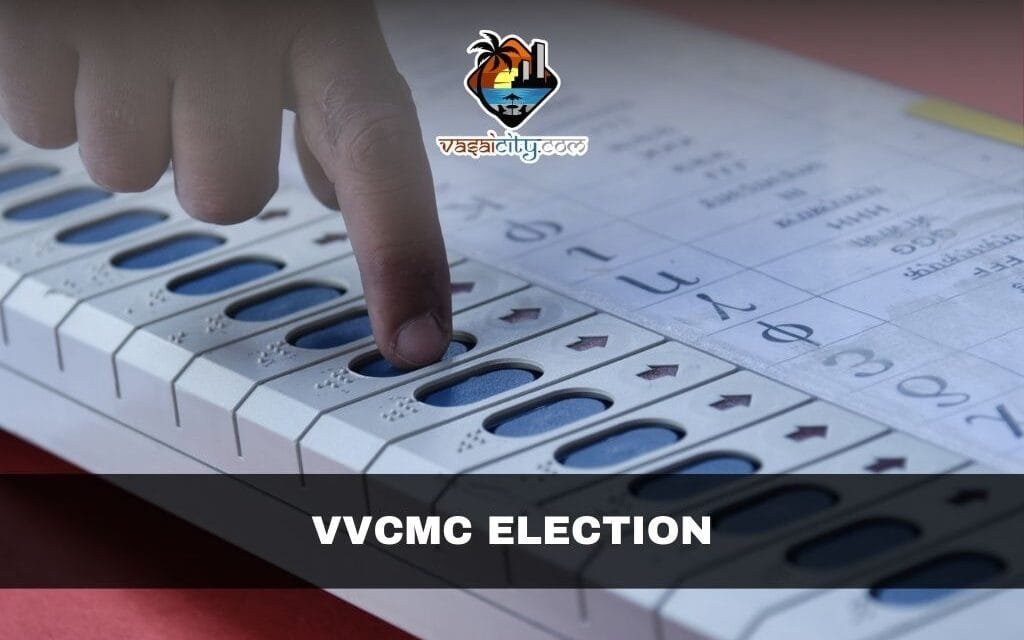
The VVCMC Election is finally set to take place after a long gap of more than ten years, giving residents of Vasai-Virar an opportunity to elect a new civic body for only the third time since the municipal corporation was formed. The first election was held in 2010, followed by the second in 2015, after which the city witnessed a prolonged democratic pause.
As Vasai-Virar prepares for the VVCMC Election, civic issues have taken centre stage, reflecting years of unchecked urban growth, infrastructure stress, and administrative challenges that directly affect daily life.
Table of Contents
Infrastructure Strain Tops the VVCMC Election Agenda
One of the biggest talking points in the VVCMC Election is the alarming condition of basic infrastructure. Rapid and largely unplanned development has stretched civic resources far beyond capacity.
Road networks across Vasai and Virar struggle to handle increasing traffic volumes. Pothole-ridden internal roads, especially in the industrial estates of Vasai East, pose daily risks to commuters and transporters. Many of these roads have remained neglected for years, despite repeated complaints from residents and business owners.
Bus stops in several areas are poorly maintained or missing altogether, creating safety concerns for passengers, particularly senior citizens and school children.
Water Supply and Sanitation Remain Chronic Problems
Water scarcity continues to dominate conversations around the VVCMC Election. Many neighbourhoods experience frequent water cuts, low pressure, and unpredictable supply schedules.
For a rapidly growing urban population, inconsistent waste management and inadequate drainage systems have worsened living conditions. During monsoons, clogged drains often lead to waterlogging, damaging homes and increasing the risk of disease.
Residents argue that unless the new civic body prioritises modern water management systems, these issues will continue to undermine quality of life.
Vasai-Virar as Mumbai’s Dormitory Town
Another key concern influencing the VVCMC Election is Vasai-Virar’s role as a major dormitory town for Mumbai. Thousands of residents commute daily for work, placing enormous pressure on local trains, buses, and road infrastructure.
The lack of last-mile connectivity and overcrowded public transport systems have turned routine commutes into exhausting daily struggles. Voters are demanding better coordination between civic authorities and transport agencies to ease this burden.
Illegal Construction and Builder-Official Nexus
Perhaps the most controversial issue in the VVCMC Election is the alleged nexus between civic officials and builders. Over the years, numerous illegal constructions have come up across Vasai-Virar, often on sensitive land parcels.
High-profile investigations by the Enforcement Directorate and the cancellation of building permits due to forged documents have shaken public trust. Residents are now demanding stricter town planning rules, transparency in approvals, and accountability within the municipal system.
Unregulated construction has also worsened traffic congestion, water shortages, and environmental damage.
Slum Redevelopment and Affordable Housing Challenges
Affordable housing and slum redevelopment have emerged as emotionally charged topics in the VVCMC Election. Five decades ago, Vasai-Virar had very few slum pockets despite widespread poverty.
Today, slums are visible across many parts of the region, largely due to migration and lack of planned housing. Residents want redevelopment projects that are humane, inclusive, and sustainable, without displacing vulnerable communities.
Ensuring adequate affordable housing stock is seen as critical to preventing further unplanned settlements.
Environmental Protection Becomes an Electoral Issue
Environmental concerns are no longer fringe topics in the VVCMC Election. Rapid urbanisation has led to rising air and water pollution, threatening the natural ecology of Vasai-Virar.
Wetlands, mangroves, and green zones have come under pressure from construction activity. Citizens’ groups argue that development cannot come at the cost of irreversible environmental damage.
Preserving the region’s natural habitat is now a clear demand from environmentally conscious voters.
Employment, Skills, and Local Economy
Job access and skill development are also influencing voter sentiment in the VVCMC Election. While many residents work in Mumbai, there is a growing demand for local employment opportunities.
Improving industrial infrastructure, supporting small businesses, and creating skill training centres could reduce dependency on long commutes and strengthen the local economy.
School Education Under VVCMC’s Responsibility
Education has emerged as a critical issue in the VVCMC Election, especially after the Maharashtra government transferred Zilla Parishad schools to the municipal corporation.
These schools serve children from economically weaker sections and need urgent revitalisation. Better infrastructure, qualified teachers, and modern facilities are essential to ensure free, quality education for all.
For official education policy updates, residents often refer to the Maharashtra government’s urban development initiatives .
Healthcare Infrastructure: A Long-Standing Demand
Healthcare is another major concern shaping the VVCMC Election narrative. Residents have long demanded a large, fully equipped civic hospital and a medical college within the municipal limits.
Currently, many patients are forced to travel to Mumbai for advanced treatment, adding financial and emotional stress. A strong public healthcare system is seen as essential for providing free or affordable medical care to the masses.
What Voters Expect from the New Civic Body
As the VVCMC Election approaches, expectations from the new governing body are high. Citizens want transparent governance, better planning, and swift action on long-pending civic issues.
The upcoming election is not just about electing representatives, but about setting the direction for Vasai-Virar’s future growth.
Inputs by Biju Cherian
This article is based on the author’s research and perspectives. The publisher claims no responsibility for inaccuracies. Views expressed are the contributor’s alone. Institutions mentioned are not endorsed unless specified.