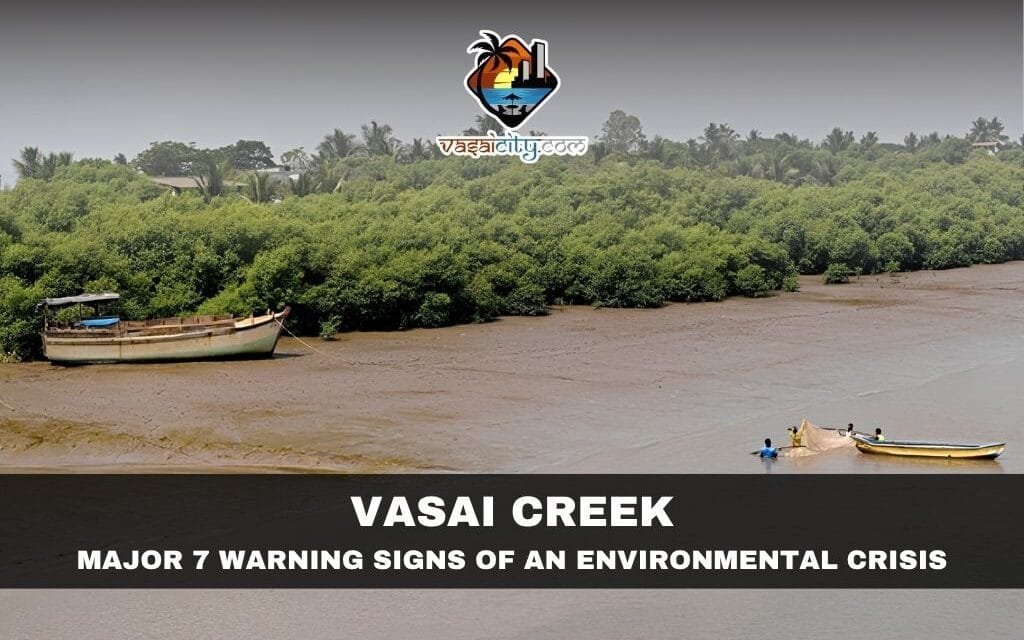
Vasai Creek has silently supported generations of people, wildlife, and businesses. Today, however, this historic waterway is facing one of the biggest environmental challenges in its long history. Pollution, unchecked encroachments, shrinking wetlands, and rapid urbanisation are steadily transforming the creek into a shadow of what it once was.
Environmental experts have long warned that a water body rarely disappears overnight. Instead, it declines gradually—through years of neglect, illegal dumping, blocked waterways, reduced tidal flow, and loss of natural ecosystems. The story of Vasai Creek reflects exactly this slow but dangerous transformation.
Table of Contents
The Historic Importance of Vasai Creek
For centuries, Vasai Creek served as one of the most significant waterways in the region. Long before roads and railways connected towns across the Mumbai Metropolitan Region (MMR), the creek functioned as a major transport route.
Historical records indicate that boats and trading vessels once travelled through these waters, connecting Vasai with Thane, Kalyan, Ulhasnagar and several other settlements. The creek played a vital role in trade, fishing, agriculture and regional development.
Communities flourished along its banks because the creek provided clean water, abundant fish, fertile soil and natural protection from floods.
Today, much of that ecological richness has faded.
How Vasai Creek Is Changing
Residents who have lived in Vasai for decades often speak about how dramatically the creek has changed.
Areas that were once deep enough for boats now suffer from heavy siltation. Natural channels have narrowed, while many sections experience increasing pollution from untreated sewage and solid waste.
The transformation did not happen in a single year.
Instead, it has been driven by multiple human activities, including:
- Illegal encroachments along creek banks
- Dumping of construction debris
- Discharge of untreated sewage
- Loss of mangroves
- Shrinking wetlands
- Rapid urban expansion
- Reduced tidal circulation
Each of these issues has gradually weakened the health of Vasai Creek.
Why Healthy Creeks Matter
Many people see a creek as merely a stretch of water separating land. In reality, creeks are among the most productive ecosystems on Earth.
A healthy Vasai Creek performs several essential functions:
It Reduces Flooding
The creek acts as a natural drainage channel during heavy rainfall, allowing excess water to flow into the sea.
When natural waterways become blocked or narrowed, rainwater has fewer escape routes, increasing the risk of flooding across nearby neighbourhoods.
It Recharges Groundwater
Freshwater gradually seeps into underground aquifers from surrounding wetlands and creek ecosystems.
When these ecosystems disappear, groundwater levels decline, making water scarcity a growing concern.
It Supports Marine Biodiversity
Mangroves and tidal creeks provide breeding grounds for numerous species of fish, crabs, prawns and birds.
A polluted Vasai Creek affects not only aquatic life but also the livelihoods of local fishing communities that depend on healthy ecosystems.
It Helps Regulate Local Climate
Large water bodies naturally cool surrounding areas.
As wetlands disappear and concrete replaces natural landscapes, local temperatures rise, contributing to the urban heat island effect.
The Role of Mangroves
Mangroves are among the most valuable natural assets surrounding Vasai Creek.
These unique forests:
- Prevent coastal erosion
- Reduce storm damage
- Filter pollutants
- Trap sediments
- Support fisheries
- Store large amounts of carbon
Unfortunately, many mangrove areas across the Mumbai Metropolitan Region have faced pressure from illegal dumping and land reclamation over the years.
Protecting mangroves is essential for preserving the future of Vasai Creek.
Urban Growth Comes With Responsibility
The Mumbai Metropolitan Region has experienced tremendous growth over the past few decades.
Housing, roads, industries and commercial projects have transformed the region’s landscape. While development is necessary, environmental experts stress that sustainable planning must accompany urban expansion.
Wetlands, creeks and floodplains should not be viewed as vacant land available for construction.
These ecosystems perform critical services that no man-made infrastructure can easily replace.
Climate Change Makes the Situation More Serious
The environmental challenges facing Vasai Creek are being intensified by climate change.
According to scientific studies, coastal regions like the Mumbai Metropolitan Region are increasingly vulnerable to:
- Sea-level rise
- More frequent extreme rainfall
- Storm surges
- Coastal flooding
- Salinity intrusion
When natural drainage systems are already weakened, these climate-related risks become even more severe.
Experts warn that restoring natural ecosystems is one of the most effective long-term strategies for improving climate resilience.
The Cost of Ignoring the Problem
The decline of Vasai Creek extends far beyond environmental concerns.
Its deterioration has direct consequences for public health, infrastructure and the local economy.
Potential impacts include:
Increased Flooding
Reduced water-carrying capacity means rainwater accumulates more quickly during monsoons.
Loss of Biodiversity
Fish populations decline while migratory birds lose important habitats.
Water Scarcity
Reduced groundwater recharge places additional pressure on freshwater resources.
Public Health Risks
Polluted water can encourage mosquito breeding, unpleasant odours and waterborne diseases.
Economic Losses
Fishing communities, tourism and local businesses may all suffer if the creek continues to deteriorate.
Can Vasai Creek Be Restored?
Environmental restoration is challenging, but many successful examples from around the world show that damaged waterways can recover when governments and communities work together.
Possible measures include:
- Preventing illegal dumping
- Improving sewage treatment
- Protecting mangrove forests
- Removing encroachments wherever legally feasible
- Restoring wetlands
- Increasing environmental awareness
- Strengthening monitoring and enforcement
Citizen participation also plays a major role.
Simple actions such as avoiding littering, reporting illegal dumping and supporting local conservation efforts can collectively make a meaningful difference.
Why Every Resident Has a Role
The future of Vasai Creek does not depend solely on government agencies.
Residents, educational institutions, environmental groups, businesses and developers all share responsibility for protecting this important ecosystem.
Every decision—whether disposing of waste responsibly, conserving mangroves or supporting sustainable urban planning—contributes to the creek’s future.
Protecting nature is not about preventing development.
It is about ensuring that development remains sustainable for future generations.
The Road Ahead for Vasai Creek
The story of Vasai Creek is ultimately a reminder that nature supports every aspect of urban life.
Healthy creeks reduce floods, improve air quality, recharge groundwater, support biodiversity and strengthen climate resilience.
If these natural systems continue to decline, the consequences will extend far beyond environmental damage. They will affect public health, infrastructure, livelihoods and the quality of life for everyone living across Vasai and the wider Mumbai Metropolitan Region.
The question is no longer whether Vasai Creek is changing.
The real question is whether the community will act in time to protect one of the region’s most valuable natural assets before the damage becomes irreversible.
Inputs by Biju Cherian
This article is based on the author’s research and perspectives. The publisher claims no responsibility for inaccuracies. Views expressed are the contributor’s alone. Institutions mentioned are not endorsed unless specified.