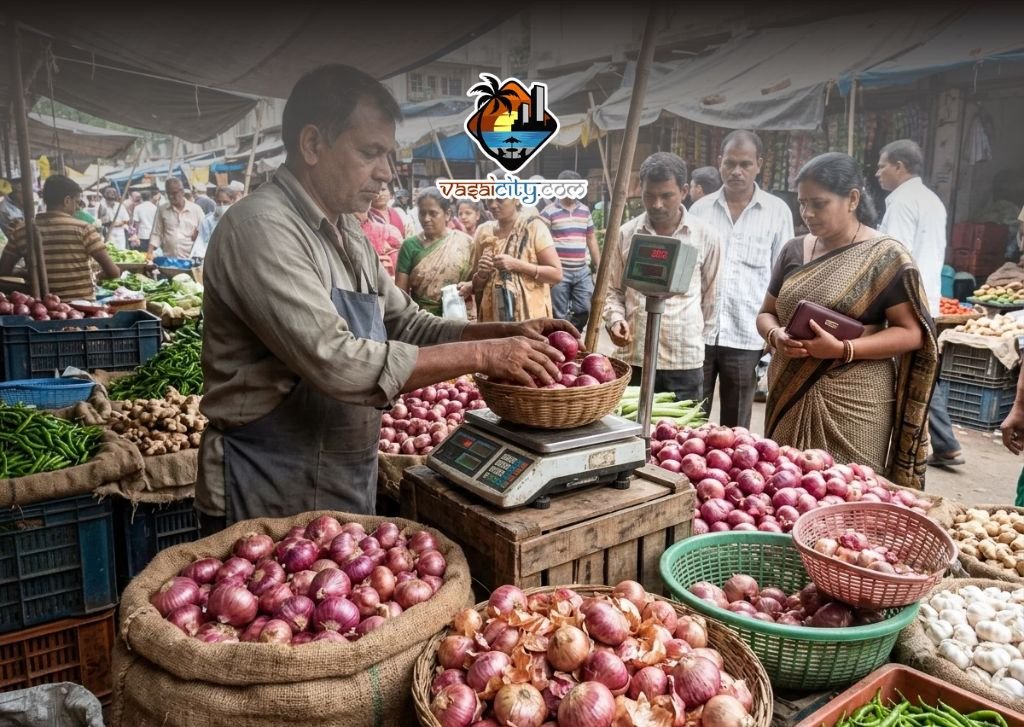

Vasai onion prices have risen sharply over the past two weeks, climbing past Rs 55 per kilogram and putting noticeable pressure on middle-class households across the city. According to local market reports, the everyday cooking staple is now selling at more than three times its usual rate.
For families in Vasai, Virar, and Nalasopara, the sudden spike is not an isolated inconvenience. It comes alongside elevated rates for other daily vegetables and kitchen essentials, forcing residents to rethink their weekly grocery lists and cut back on regular consumption.
In This Article
What Is Driving the Sudden Jump in Vasai Onion Prices?
The sharp increase in retail rates is the direct result of a tightening supply chain across Maharashtra’s primary onion-producing belt. Five key factors are currently keeping wholesale and retail rates elevated:
- Unseasonal rainfall during harvest: Untimely rain damaged standing and newly harvested crops, reducing the volume of quality produce entering the market.
- Post-harvest losses, rot, and sprouting: Moisture and storage stress have led to significant spoilage in stored stocks, cutting down the amount of marketable onions available.
- Depletion of stored rabi stocks: Maharashtra relies heavily on stored rabi (winter-sown) onions to bridge the supply gap until fresh seasonal arrivals reach mandis. Those buffer stocks have now been heavily depleted.
- Reduced arrivals from major growing belts: Supply has dropped from key agricultural hubs including Nashik, Ahilyanagar (formerly Ahmednagar), Pune, and Solapur.
- Strong inter-state demand: Buyers from outside Maharashtra continue to compete for the limited available stock, keeping wholesale mandi prices firm and pushing up retail rates in the Mumbai Metropolitan Region (MMR), including Vasai-Virar.
How Maharashtra’s Supply Chain Affects Local Markets in Vasai-Virar
Vasai-Virar does not produce onions at a commercial scale; instead, local retail markets, vegetable vendors, and neighbourhood kirana stores depend on daily wholesale inflows from major agricultural produce market committees (APMCs) in Nashik, Pune, and the Vashi APMC market in Navi Mumbai.
When arrivals dip at source mandis in Nashik or Ahilyanagar, the impact is felt almost immediately in local retail hubs—from Vasai Road’s bustling station markets to retail bazaars in Nalasopara and Virar. Transport costs, sorting losses from damaged stock, and retail margins further add to the final price paid by consumers.
In a typical agricultural cycle, rabi onions harvested in the summer have a longer shelf life and are stored in ventilated structures (known locally as kanda chawl) to supply markets through the monsoon and early winter. When unseasonal rain disrupts this cycle, the resulting rot and sprouting shrink the available buffer, leaving markets vulnerable to rapid price spikes until fresh kharif or late-kharif harvests stabilise supply.
Impact on Middle-Class Households and Daily Cooking
For salaried families and fixed-income households in Vasai, the jump to above Rs 55 per kg has made monthly budgeting significantly harder. Because onions form the base of most Maharashtrian and Indian home-cooked meals—from daily dals and sabzis to traditional coastal curries—a threefold price increase quickly adds up over a month.
Local residents report making several practical adjustments to cope with the rising cost of groceries:
- Cutting down on quantity: Many households are using fewer onions per meal or preparing certain dishes without onions altogether.
- Balancing meat, fish, and vegetable budgets: On days when families purchase fish or meat, they are buying fewer vegetables to keep total daily spending within limits.
- Switching to seasonal alternatives: Shoppers are opting for relatively affordable seasonal vegetables where available to offset the cost of staples.
- Buying smaller quantities more frequently: Rather than purchasing onions in bulk (2–5 kg at a time), many residents are buying smaller portions every few days in the hope that prices will soon cool down.
Part of a Wider Rise in Kitchen Staples
The burden on Vasai kitchens is compounded by the fact that onions are not the only item costing more. Households are simultaneously dealing with higher prices across a broader basket of essential groceries, including:
- Garlic and ginger: Key aromatics used alongside onions in everyday cooking.
- Rice and pulses: Core dietary staples that make up a large share of monthly grocery bills.
- Cooking oil and other vegetables: Everyday items whose combined increase leaves very little room for middle-class families to absorb sudden price shocks.
When multiple staples rise at the same time, families cannot easily substitute one item for another without affecting nutrition or meal variety. Small eateries, tiffin services, and street-food vendors across Vasai-Virar also face tighter margins, as onions are a core ingredient in snacks, thalis, and gravies.
Checking Official Market Rates and What Happens Next
Residents and local traders who want to track wholesale price movements across Maharashtra’s mandis—including Nashik, Pune, Solapur, and Mumbai—can monitor daily arrival and modal price data on the Government of India’s official agricultural marketing portal.
In the short term, Vasai onion prices are likely to remain sensitive to daily wholesale arrivals from Nashik, Ahilyanagar, Pune, and Solapur. Relief for local consumers typically depends on fresh crop arrivals reaching the mandis in steady volumes and a slowdown in inter-state buying pressure.
Until supply stabilises, Vasai-Virar residents are expected to continue managing their kitchen budgets carefully—trimming quantities, shopping selectively, and waiting for wholesale inflows to ease the strain on everyday household expenses.
Frequently Asked Questions (FAQ’s)
What are the current Vasai onion prices?
Based on local market reports, retail Vasai onion prices have climbed above Rs 55 per kilogram. This marks a sharp increase over the last two weeks, with rates reaching more than three times their usual levels and putting pressure on local household budgets.
Why have onion prices increased so suddenly in Vasai?
The surge is driven by a supply shortage caused by unseasonal rain during harvest, post-harvest losses such as rot and sprouting, and the depletion of stored rabi onion stocks. Reduced arrivals from key growing belts and strong inter-state demand have further pushed up prices.
Which Maharashtra regions supply onions to Vasai-Virar?
Vasai-Virar’s retail markets depend on wholesale inflows from major onion-growing belts in Maharashtra, particularly Nashik, Ahilyanagar, Pune, and Solapur. When arrivals drop in these source regions, retail prices in Vasai, Virar, and Nalasopara rise quickly.
How are Vasai residents coping with high onion prices?
Many middle-class families in Vasai are reducing their daily onion consumption or cooking certain meals without onions. Residents are also buying smaller quantities more frequently, choosing seasonal vegetable alternatives, and buying fewer vegetables on days they purchase fish or meat.
Are other kitchen staples also getting more expensive in Vasai?
Yes. Local households are facing a broader rise in food costs alongside onions. Essential items such as garlic, ginger, rice, pulses, cooking oil, and several everyday vegetables have also seen elevated prices, increasing overall monthly grocery spending.
What are rabi onion stocks and why do they matter?
Rabi onions are winter-sown crops harvested in summer that have a longer shelf life than monsoon crops. Farmers and traders store them to maintain steady market supply until fresh harvests arrive. When stored rabi stocks spoil or run low, market prices spike.
Where can residents check official wholesale onion prices in Maharashtra?
Consumers and traders can check daily wholesale mandi rates and arrival volumes across Maharashtra’s agricultural markets on the Government of India’s official Agmarknet portal (agmarknet.gov.in). Note that retail prices in Vasai will be higher than wholesale mandi rates due to transport and local margins.
When are Vasai onion prices expected to come down?
There is no confirmed date for when retail rates will drop. Historically, onion prices ease only when fresh crop arrivals from Maharashtra’s major growing districts reach wholesale mandis in steady volumes and inter-state demand stabilises.