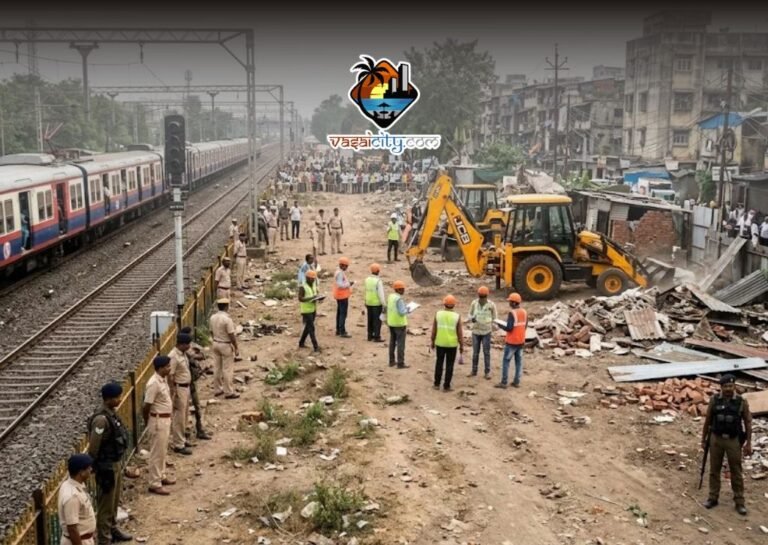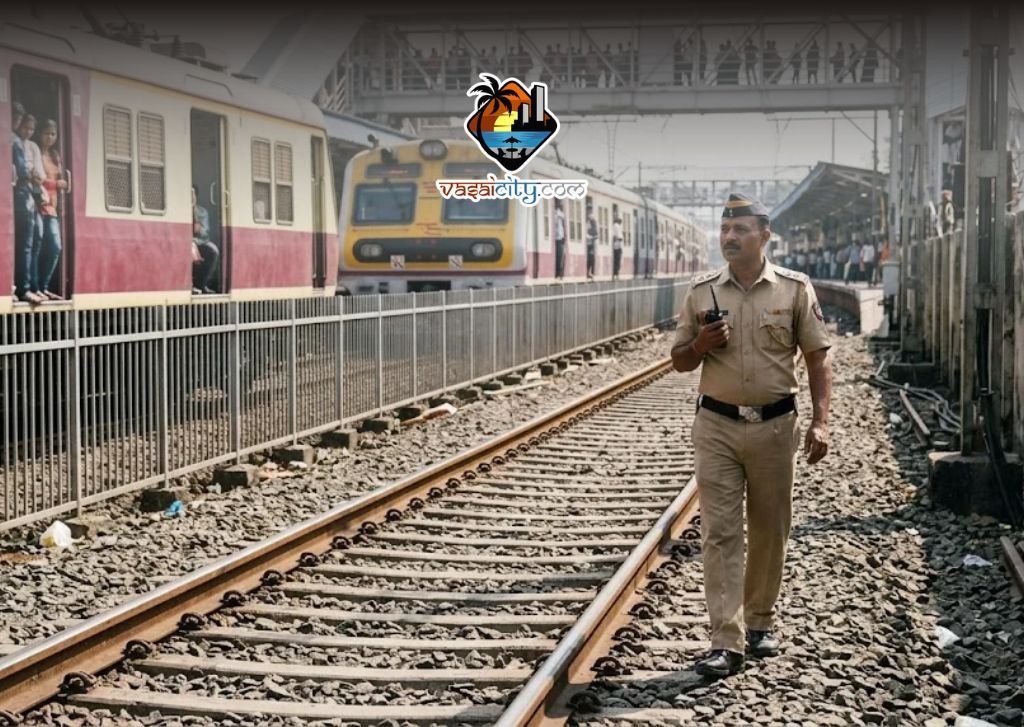

The Vasai Railway Police have recorded 984 fatalities resulting from railway-related accidents along the 31-kilometre Western Railway corridor between Mira Road and Vaitarna from 2022 through October 2026.
Official accident documentation indicates that the heavy commuter density in the northern suburban belt, combined with regular track trespassing and acute peak-hour congestion, continues to present severe safety hazards for daily railway passengers travelling through the Palghar and Thane districts.
Table of Contents
Fatalities Across the 31-Kilometre Suburban Corridor
The stretch extending from Mira Road to Vaitarna forms one of the busiest arteries of the Western Railway suburban network. According to incident records compiled over the nearly four-year period, 984 individuals lost their lives across tracks, platforms, and open crossings.
Of the total 984 casualties, 159 deaths were registered as suicides. These incidents predominantly occurred in relatively secluded and unmonitored sections of the tracks, where boundary walls are either absent or broken, allowing unauthorised access to railway property.
The remaining 825 fatalities stemmed from hazardous travel conditions and routine track trespassing. The primary causes documented by railway authorities include:
- Passengers slipping or falling from overcrowded suburban local train coaches.
- Commuters travelling on footboards or hanging out of doorways colliding with trackside overhead equipment (OHE) poles and structural pillars.
- Pedestrians being struck by speeding suburban and long-distance trains while crossing railway tracks directly instead of using designated foot overbridges (FOBs).
- Mishaps occurring while boarding or alighting from moving trains at congested station platforms.
Accident Blackspots: Virar–Vaitarna and Vasai–Nalasopara Corridors
The official data identifies specific track sections where fatal accidents occur at an elevated frequency. The rail stretches between Nalasopara and Vasai Road, as well as between Virar and Vaitarna, report the highest accident density.
Nalasopara and Vasai Road stations manage massive passenger volumes during morning and evening rush hours. With thousands of passengers attempting to enter already packed local trains originating from Virar, commuters frequently resort to boarding precarious footboards. Furthermore, commuter flow at intermediate locations prompts pedestrians to cross tracks directly to bypass long queues or crowded foot overbridges.
North of Virar, the section extending toward Vaitarna features longer distances between stations, open peripheries, and high-speed express train movements. Local villagers, agricultural workers, and casual pedestrians frequently navigate across tracks at non-designated points, contributing significantly to trespassing-related casualties.
Vasai Railway Police Jurisdiction Bifurcated to Improve Response Times
In direct response to soaring commuter loads, escalating accident rates, and the logistical challenges of monitoring a sprawling 31-kilometre rail corridor, authorities restructured local railway law enforcement.
Previously, a single Government Railway Police (GRP) station—the Vasai Railway Police station—held administrative and investigative jurisdiction over the entire corridor from Mira Road to Vaitarna. Managing emergency medical responses, attending to accident sites, conducting inquests, and patrolling platforms across six major suburban stations proved increasingly strained under a single unit.
To resolve these operational bottlenecks, the jurisdiction was formally bifurcated into two independent police stations:
- Bhayandar Railway Police Station: Managing the southern section of the corridor covering Mira Road and Bhayandar.
- Vasai Railway Police Station: Retaining responsibility for the northern section extending through Naigaon, Vasai Road, Nalasopara, Virar, and up to Vaitarna.
This administrative division aims to ensure rapid emergency medical assistance during the crucial “golden hour” following track mishaps, faster removal of injured victims to nearby civic hospitals, and tighter patrolling against track trespassing.
Local Commuter Challenges and Ongoing Safety Measures
Commuters in Vasai, Virar, and Nalasopara have persistently raised concerns regarding infrastructure limitations. While Western Railway has introduced automated boundary walls, elevated foot overbridges, and additional escalators across suburban stations, ground-level hazards remain acute.
Severe overcrowding during morning peak hours forces hundreds of passengers to travel on train footboards. Despite public announcements and regular penal drives conducted under the Railway Act against illegal track crossing, trespassing remains prevalent due to congested station exit points and long walking detours between east and west settlement pockets.
Emergency personnel emphasise that reducing track deaths requires continuous public compliance with safety guidelines alongside administrative action. Railway administrations continue to construct boundary fencing along open sections, expand 15-car train services to absorb passenger volume, and deploy personnel at critical track crossovers.
To consult official safety regulations and penalties regarding trespassing on railway tracks, refer to the Indian Railways Official Portal.
Frequently Asked Questions
How many railway track deaths did the Vasai Railway Police record from 2022 to October 2026?
The Vasai Railway Police recorded a total of 984 fatalities resulting from train and track-related accidents between Mira Road and Vaitarna from 2022 to October 2026 across a 31-kilometre suburban railway network.
What are the main causes of track deaths between Mira Road and Vaitarna?
Excluding 159 recorded suicides, most fatalities resulted from severe suburban overcrowding, commuters falling from moving local trains, passengers striking trackside electrical poles while travelling on footboards, and pedestrians being hit while crossing tracks on foot.
Which sections between Mira Road and Vaitarna report the highest accident rates?
The rail sections between Vaitarna–Virar and Nalasopara–Vasai Road record the highest frequency of accidents due to dense passenger volumes, intense platform overcrowding, and pedestrians attempting to cross railway tracks directly to bypass foot overbridges.
Why was the Vasai Railway Police jurisdiction divided into two police stations?
Due to escalating passenger loads and heavy accident frequencies along the 31-kilometre stretch, the original jurisdiction was split into two independent units—Bhayandar and Vasai—to accelerate emergency medical response times and improve regular track patrolling.
How many of the 984 recorded deaths were confirmed suicides?
Of the 984 total deaths registered along the corridor between 2022 and October 2026, 159 cases were confirmed suicides, occurring mostly in secluded, unfenced sections of the railway tracks.
Which stations fall under the bifurcated Vasai Railway Police station?
Following the bifurcation, the Vasai Railway Police station oversees the railway network from Naigaon up to Vaitarna, covering major hubs including Vasai Road, Nalasopara, and Virar, while the Bhayandar station covers Mira Road and Bhayandar.
What should commuters do if they witness an accident on the Vasai-Virar railway line?
Commuters who witness an accident should alert the on-duty Station Master, inform GRP or Railway Protection Force (RPF) personnel on the platform, or call the railway emergency helpline (139) immediately to dispatch medical assistance.
Is walking across tracks punishable by law in the Vasai-Virar section?
Yes, crossing railway tracks directly instead of using designated foot overbridges or subways is an offence under Section 147 of the Railway Act, carrying penalties including monetary fines and potential imprisonment.