Vasai Roads have once again become the centre of public debate after the sudden collapse of a bridge connecting Vadghar village in Vasai East. The incident has not only disrupted connectivity for thousands of residents but has also reignited concerns about the poor condition of roads, recurring potholes, waterlogging, and the quality of infrastructure across the Vasai-Virar region.
Fortunately, no lives were lost when the bridge gave way. However, two vehicles plunged along with the collapsed structure, suffering extensive damage. While the absence of casualties came as a relief, the incident has raised serious questions about infrastructure maintenance, public safety, and the accountability of civic authorities.
Table of Contents
Bridge Collapse Highlights the State of Vasai Roads
The collapsed bridge served as an important link for residents of Vadghar, Kalbhon, Lendi, and several nearby villages under the Medhe Gram Panchayat area in Vasai East.
According to local residents, the bridge had been subjected to repeated movement of overloaded trucks transporting minerals from nearby excavation sites. Despite several complaints regarding excessive loads and visible structural deterioration, no effective preventive measures were reportedly taken.
Eventually, the bridge failed under pressure, leaving nearby communities disconnected from their usual route.
The collapse has forced residents to travel nearly 20 kilometres through Ganeshpuri to reach schools, workplaces, hospitals, and marketplaces.
Villagers have demanded that the administration immediately provide an alternative access route while work on reconstructing the bridge begins without delay.
Residents Face Daily Struggles on Vasai Roads
While the bridge collapse has drawn widespread attention, many residents believe it reflects a much larger problem affecting Vasai Roads across both urban and rural areas.
Whether under the jurisdiction of the Vasai Virar City Municipal Corporation (VVCMC), Gram Panchayats, or the Zilla Parishad, road conditions continue to deteriorate despite annual infrastructure spending.
Industrial estates in Vasai East continue to struggle with damaged approach roads that make transportation difficult for businesses and workers alike.
Many residential colonies also suffer because developers have not completed internal roads even years after handing over possession to homeowners.
Meanwhile, major connecting roads are often covered with temporary patchwork repairs that fail within weeks.
Why Vasai Roads Continue to Deteriorate Every Monsoon
Every monsoon brings the same concerns for commuters across the city.
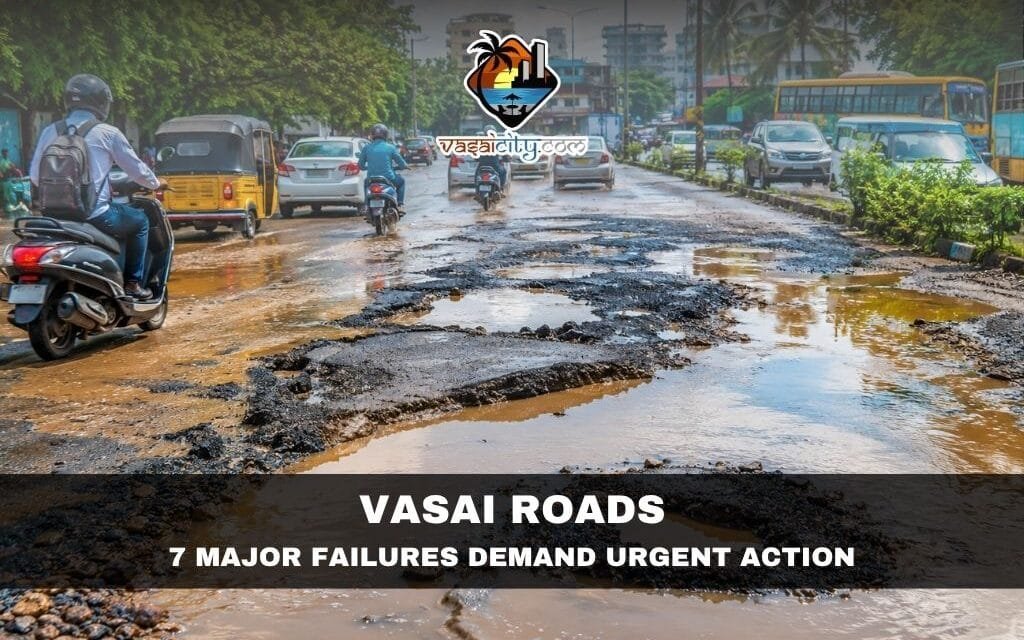
Heavy rainfall quickly exposes weak road surfaces, resulting in large potholes, damaged asphalt, and dangerous driving conditions.
Waterlogging remains one of the biggest reasons behind the rapid deterioration of Vasai Roads.
Large parts of Vasai are situated on low-lying terrain, making them vulnerable to flooding during prolonged rainfall.
When rainwater remains stagnant for several days, it weakens both the road surface and the underlying foundation.
As vehicles continue to travel over saturated roads, cracks widen rapidly and eventually turn into deep potholes.
Even several days after rainfall stops, many roads continue to remain waterlogged due to inadequate drainage systems.
Temporary Repairs Fail to Solve the Problem
Residents frequently question why roads deteriorate so quickly despite crores of rupees being allocated every year for repairs, monsoon preparedness, drainage projects, and infrastructure improvements.
One major criticism is the continued use of temporary repair techniques instead of durable engineering solutions.
Instead of rebuilding damaged sections using proper tar-macadam or concrete technology, contractors often fill potholes with gravel, loose stones, mud, and a thin coating of tar.
Such repairs rarely survive heavy rainfall.
Once the surface layer washes away, dangerous craters reappear, creating serious hazards for motorists, especially two-wheeler riders.
Utility Work Leaves Vasai Roads Damaged
Frequent excavation work for water pipelines, drainage networks, sewage infrastructure, electricity cables, and telecommunication projects has become another major reason for damaged roads.
Across several parts of Vasai, roads are repeatedly dug up throughout the year.
Residents allege that after utility work is completed, restoration often remains incomplete or below acceptable quality standards.
This leaves uneven road surfaces, loose debris, muddy patches, and fresh potholes that become even more dangerous during rainfall.
Without proper coordination between civic departments and contractors, the same roads continue to be excavated multiple times every year.
Industrial Growth Adds Additional Pressure
Rapid urbanisation has significantly increased traffic movement across the region.
Heavy commercial vehicles servicing industrial estates, construction projects, and logistics hubs place additional pressure on already weak road infrastructure.
In several locations, overloaded trucks regularly travel on roads and bridges originally designed for much lighter traffic.
The recent bridge collapse near Vadghar has once again highlighted the importance of enforcing vehicle load restrictions before irreversible damage occurs.
Public Safety Cannot Be Ignored
The poor condition of Vasai Roads is no longer merely an inconvenience.
Every damaged road increases the risk of accidents involving pedestrians, cyclists, motorcyclists, school buses, ambulances, and emergency services.
Large potholes hidden beneath rainwater make driving particularly dangerous during the monsoon season.
Motorcyclists often lose balance after hitting submerged potholes, while motorists are forced to make sudden lane changes to avoid damaged stretches.
These conditions also delay emergency medical services and increase travel times for thousands of daily commuters.
Citizens Demand Greater Accountability
Residents continue to question why recurring infrastructure problems remain unresolved despite significant annual public expenditure.
They argue that taxpayers deserve roads capable of withstanding seasonal rainfall without requiring repeated repairs every few months.
Citizens are also demanding greater transparency regarding road construction contracts, maintenance schedules, quality inspections, and project execution.
Many believe stricter supervision of contractors and independent quality audits could significantly improve road durability.
What Authorities Can Do
Experts suggest that long-term improvement requires more than temporary patchwork.
Some of the immediate priorities include:
- Reconstruction of damaged roads using durable engineering standards.
- Improved drainage systems to prevent prolonged waterlogging.
- Strict enforcement against overloaded commercial vehicles.
- Better coordination between utility agencies before road excavation.
- Timely restoration of roads after infrastructure projects.
- Regular structural inspections of bridges across the Vasai-Virar region.
- Transparent monitoring of road repair contracts.
Implementing these measures could substantially improve commuter safety while reducing recurring maintenance costs.
Residents Can Also Report Civic Issues
Residents who notice dangerous potholes, damaged roads, or incomplete restoration work can report these issues through the official civic grievance mechanisms.
The Vasai Virar City Municipal Corporation encourages citizens to submit complaints regarding road damage and civic infrastructure through its official grievance portal and public communication channels.
Photographs, location details, and timely reporting can help authorities prioritise repairs more efficiently.
Residents also frequently highlight civic issues through local community groups and social media to bring urgent problems to the attention of elected representatives.
For official civic services and public grievance information, residents may refer to the Maharashtra Government’s Aaple Sarkar portal.
A Wake-Up Call for Better Infrastructure
The collapse of the Vadghar bridge is more than an isolated incident—it serves as a warning about the broader condition of Vasai Roads.
Safe roads are essential for economic growth, education, healthcare, emergency response, and everyday life.
Residents are not demanding extraordinary infrastructure. They simply expect roads that remain safe throughout the year, effective drainage systems that prevent flooding, and responsible utilisation of public funds.
As another monsoon season tests the region’s infrastructure, many believe this is the time for long-term planning rather than short-term patchwork.
The future of Vasai Roads will depend not only on repair budgets but also on accountability, engineering quality, and timely action from the concerned authorities.
Inputs by Biju Cherian
This article is based on the author’s research and perspectives. The publisher claims no responsibility for inaccuracies. Views expressed are the contributor’s alone. Institutions mentioned are not endorsed unless specified.