
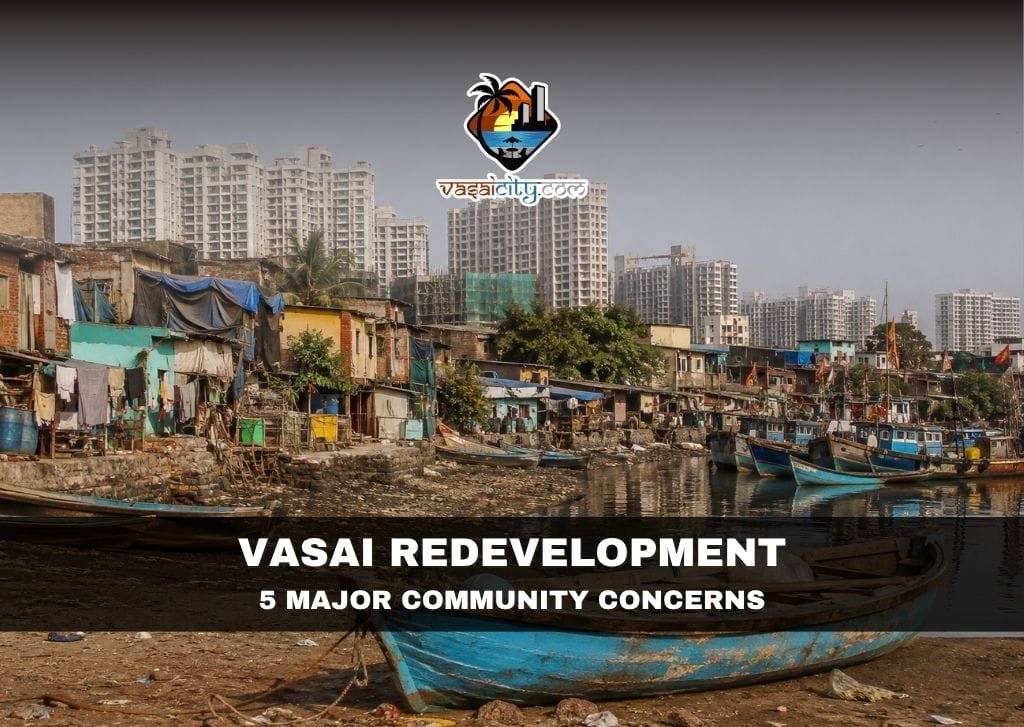
Vasai redevelopment is rapidly changing the landscape of the region, but the transformation is also raising important questions about the future of the communities that have lived here for generations.
Vasai's original inhabitants, often referred to as bhumiputras or sons of the soil, have deep connections with historic gaothans, koliwadas and indigenous padas. For many families, these settlements are not simply residential areas. They represent generations of history, culture, livelihoods and community life.
As construction activity increases, residents from these traditional settlements are concerned that redevelopment could gradually alter the character of their neighbourhoods and weaken the social networks that have existed for decades.
Table of Contents
Vasai Redevelopment and the Identity of Gaothans
One of the biggest concerns surrounding Vasai redevelopment is the treatment of traditional gaothans and older settlements.
Some long-established settlements are increasingly being viewed through the lens of modern urban development. Families who have lived in these areas for generations fear that their ancestral homes and properties could be classified or treated as unauthorised simply because the settlements were not planned according to today's urban standards.
The issue is particularly significant because gaothans have evolved over long periods. Their roads, homes, community spaces and social structures often reflect the needs of the original residents rather than the requirements of a modern planned township.
Maharashtra's planning framework itself recognises the importance of gaothan areas in village planning and development. Government planning documents also provide for the extension of existing gaothans and the creation of new gaothan areas.
Vasai Redevelopment Must Not Erase Traditional Padas
Indigenous padas face another layer of concern.
For families living in these settlements, the neighbourhood is closely connected to their identity and way of life. When traditional settlements are viewed only as land parcels available for redevelopment, their cultural and social significance can easily be overlooked.
A modern development plan should therefore distinguish between genuinely unauthorised construction and historically established communities that require infrastructure, legal clarity and planned improvement.
Instead of simply replacing older settlements with high-density buildings, Vasai redevelopment should focus on upgrading housing and infrastructure while protecting the communities that already exist.
This could include better roads, drainage, water supply, sanitation, public spaces and access to essential services without unnecessarily destroying the traditional character of the settlement.
Koliwadas Need Development That Supports Fishing
The concerns are equally important in Vasai's koliwadas.
Traditional fishing communities depend on more than a house. Their livelihoods require access to fishing areas, equipment storage, boat-related activities, drying spaces, community areas and markets for marine products.
High-rise construction and commercial corridors can change the physical environment around these communities. If redevelopment is planned without considering traditional occupations, the result could be the gradual loss of the economic ecosystem on which fisher families depend.
Vasai redevelopment should therefore incorporate dedicated spaces for traditional fishing-related activities.
Planning should consider areas for storing and repairing fishing equipment, drying nets, handling marine products and conducting community activities. These requirements should be part of the planning process rather than treated as obstacles to urban development.
5 Priorities for Better Vasai Redevelopment
A future-focused approach to Vasai redevelopment does not mean stopping development. Instead, it means ensuring that growth benefits existing residents while creating opportunities for the next generation.
1. Affordable Bhumiputra Housing
Dedicated housing initiatives for original local communities could help families remain connected to their traditional areas.
Where redevelopment is necessary, residents should have access to transparent rehabilitation mechanisms, affordable housing and adequate community infrastructure.
Maharashtra's rehabilitation framework already provides for structured rehabilitation and resettlement in applicable cases, including mechanisms involving district-level authorities.
2. Protect Gaothans, Padas and Koliwadas
Traditional settlements should be properly mapped, documented and incorporated into development planning.
The objective should be planned improvement rather than indiscriminate replacement.
The Maharashtra government has previously issued directions concerning surveys and property records in village areas, highlighting the importance of properly documenting land and property rights.
3. Create Local Employment and Business Opportunities
Development should create economic opportunities for the people already living in Vasai.
Local businesses, traditional occupations, tourism, food enterprises, handicrafts, fishing-related activities and cultural tourism can all become part of a broader economic strategy.
Instead of forcing original communities to move away in search of employment, development can be designed to create new opportunities within their own region.
4. Preserve Local History and Culture
Vasai's identity is built from many layers of history and communities.
The histories, languages, traditions, festivals, occupations and cultural practices of its original residents should be documented and promoted.
Community museums, heritage walks, cultural centres and local tourism initiatives could help younger generations understand the history of the settlements in which they live.
5. Give Communities a Stronger Voice
Perhaps the most important requirement is meaningful participation.
Residents of gaothans, padas and koliwadas should have an opportunity to participate in discussions about redevelopment proposals that directly affect their homes and livelihoods.
Development plans should involve consultation, transparent communication and accessible grievance mechanisms.
Development and Heritage Can Coexist
The debate over Vasai redevelopment should not be reduced to a choice between development and preservation.
The two can coexist.
Vasai needs better infrastructure, improved housing, employment opportunities and modern civic facilities. At the same time, the region should not lose the communities, occupations and cultural identities that make it distinct.
The Mumbai Metropolitan Region Development Authority has previously implemented schemes aimed at improving rural areas within the Mumbai Metropolitan Region, including infrastructure and housing-related initiatives and a Tribal Village Development Scheme that included gaothan expansion and basic amenities.
This demonstrates that infrastructure improvement and community-oriented development do not have to be competing objectives.
A Community-Centred Vision for Vasai
The future of Vasai redevelopment should ultimately be measured not only by the number of buildings constructed, but also by the quality of life created for existing residents.
The original communities need secure homes, better infrastructure and access to new economic opportunities. Their gaothans, padas and koliwadas also need protection from development that ignores their traditional way of life.
A balanced approach could allow Vasai to modernise while retaining its local character.
The goal should be a Vasai where development creates opportunities without displacement, modern infrastructure without cultural erasure, and economic growth without sacrificing traditional livelihoods.
For the original communities, redevelopment should mean a better future—not the loss of the places they have called home for generations.