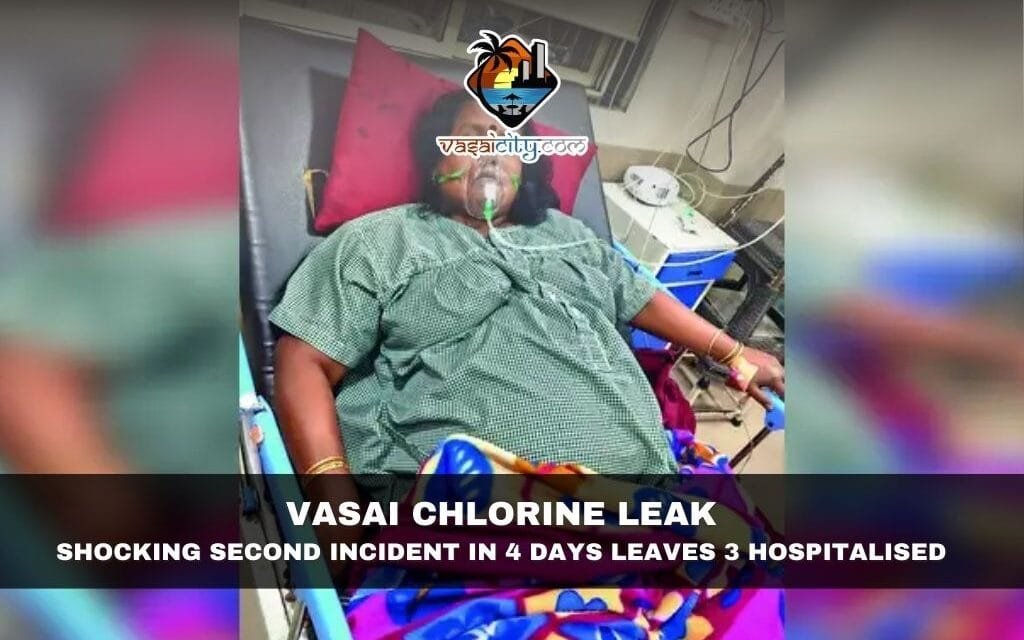
Vasai chlorine leak triggered chaos once again on Saturday evening, leaving three women hospitalised and an entire community enveloped in suffocating toxic fumes. This marks the second such incident in just four days, intensifying fears among residents about safety lapses and deteriorating chlorine cylinders stored in civic water facilities across the Vasai-Virar region.
Table of Contents
Panic Returns to Manickpur
The leak occurred around 4 pm at the Vasai water supply plant in Manickpur, where a rusted 100 kg chlorine cylinder reportedly began releasing gas during a neutralisation attempt. Within minutes, the sharp chemical odour spread through nearby lanes, forcing people to run indoors and cover their faces.
Witnesses said the gas smelled “strong and burning,” causing intense irritation in the eyes and chest.
Local resident Anand D’Souza from Manickpur Naka recalled the frightening moment.
“We suddenly started having difficulty breathing. We had no idea what was happening until we heard there was a gas leak,” he said. His 79-year-old mother suffered severe breathing distress and struggled to stabilise for a long period.
Three Women Hospitalised
Three women, including two nurses and a dispensary staff member from a nearby civic facility, collapsed due to unbearable fumes and were rushed to DM Pettit Hospital, Vasai Gaon. Doctors said they were treated for respiratory irritation and observed overnight as a precaution.
Another resident, Ayush Sheikh, described how confusion turned to panic:
“People were feeling suffocated, and nobody knew what was happening. Later, we realised it was another gas leak from the water plant. Everyone was terrified.”
How the Cylinder Failed
According to internal sources, the cylinder involved in the Vasai chlorine leak was severely rusted, including its valve. During efforts to neutralise the gas, the corroded valve reportedly snapped. Workers attempted to lower the cylinder into a containment drum, but the drum overheated and burst, releasing a heavier cloud of toxic fumes into the air.
Residents say the incident could have been far worse if wind direction had shifted toward the residential pockets.
Second Chlorine Disaster in Four Days
Saturday’s crisis came just days after the Diwanman tragedy in Vasai West, where a 15-year-old chlorine cylinder ruptured, killing 59-year-old Dev Pardiwala and hospitalising 18 others, including five fire brigade personnel.
Civic officials have acknowledged the presence of numerous ageing chlorine cylinders, some 15–20 years old, stored at water supply plants throughout Vasai-Virar. Many are considered too risky to move yet have not been replaced, despite multiple warning letters and safety concerns raised by local groups.
Residents Demand Accountability
Angry locals say repeated negligence by civic authorities has turned the neighbourhood into a ticking chemical time bomb.
“We don’t want assurances—we want action. Why are old cylinders still stored here? Are they waiting for another death?” asked a resident leader who demanded immediate removal of corroded stock and an independent safety audit.
Safety experts say chlorine, although commonly used for water purification, becomes extremely dangerous when mishandled. Even short-term exposure can cause lung damage, skin burns, and life-threatening respiratory failure.
The National Disaster Management Authority (NDMA) states that proper storage, periodic inspections, and functioning safety valves are mandatory for chlorine handling.
What Happens Next
Residents expect the Vasai Virar City Municipal Corporation (VVCMC) to:
- Remove and safely dispose of all outdated chlorine cylinders
- Conduct a transparent inspection across all water treatment plants
- Install real-time monitoring alarms and emergency alert systems
- Provide training and safety gear to ground staff
For now, fear remains thick in Manickpur, much like the chlorine fumes that filled the air on Saturday. Many say they will not feel safe until strong preventive action replaces delayed reaction.