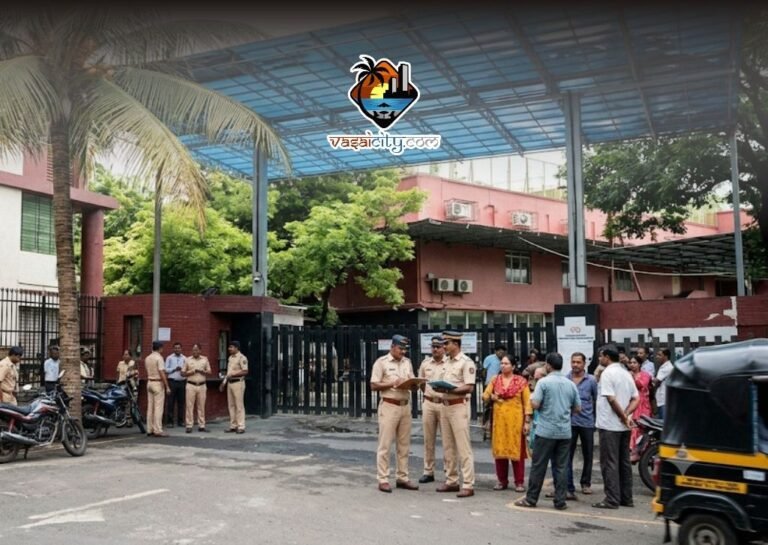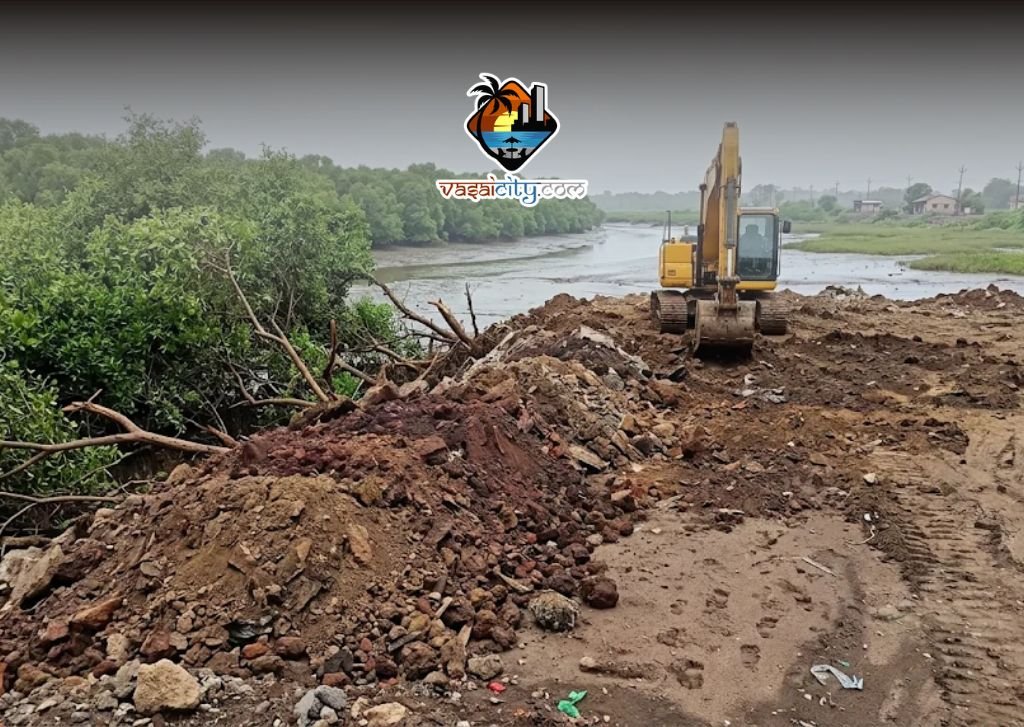

Vasai mangrove destruction has emerged as a critical issue following the registration of a First Information Report (FIR) against six individuals, including prominent local representatives, for allegedly destroying environmentally sensitive wetlands in Vasai West. The accused, who include the sarpanch and gramsevak of the Kalamb gram panchayat alongside a private contractor, face serious charges for facilitating illegal soil dumping on government land.
The authorities assert that the landfilling was executed to clear ground for a commercial mobile tower, a project that severely compromised the surrounding coastal ecosystem. Revenue department officials have warned that the unauthorized land levelling has obstructed the natural flow of the local creek, creating immediate flooding risks for nearby residential and agricultural zones.
In This Article
Key Facts Behind the Kalamb Illegal Dumping Case
The controversy centres on a parcel of government land situated along the Kalamb creek in Vasai West. According to official reports, the revenue department had leased this specific plot to Indus, a mobile infrastructure company, on a 10-year agreement to erect a telecommunications tower.
However, possessing a lease does not exempt leaseholders from stringent environmental and developmental regulations. The accused allegedly bypassed mandatory protocols, initiating massive soil filling and land levelling operations without securing the requisite prior permissions from the local revenue department.
The illicit dumping directly damaged mature mangroves and drastically altered the topography of the wetland area. Following an inspection and subsequent complaint by Santosh Mate, a circle officer with the revenue department, the Arnala Sagari police intervened.
The police have officially registered a criminal case against the six individuals under the strict provisions of the Environment Protection Act, as well as Section 326(c) of the Bharatiya Nyaya Sanhita (BNS), which deals with acts causing severe damage or mischief.
Why the Natural Creek Flow Matters to Vasai West
For residents of Vasai, Virar, and Nalasopara, the health of the coastal wetlands is not merely an environmental concern; it is a matter of public safety and infrastructural survival. Mangroves act as a critical natural buffer, absorbing tidal surges from the Arabian Sea and providing a vital drainage network during the heavy monsoon months.
When contractors dump soil into these delicate ecosystems to create solid ground for construction, they block the natural tributaries and creek flows that allow rainwater to escape into the sea. The Revenue Department explicitly highlighted this danger, warning that the obstruction caused by the Kalamb soil dumping poses a major risk of localized flooding.
If the creek’s natural drainage capacity is compromised, monsoon floodwaters are forced back into inland settlements, threatening homes, damaging local road networks, and severely affecting the livelihoods of traditional farming and fishing communities in Vasai West. Furthermore, the destruction of these barriers frequently leads to heightened groundwater salinity, ruining local freshwater wells that many villagers still rely on for domestic use.
A History of Environmental Threats in Coastal Vasai
This recent FIR in Kalamb is not an isolated incident. Over the past decade, incidents of Vasai mangrove destruction have become alarmingly frequent, particularly in coastal and low-lying pockets such as Kalamb, Naigaon, and Suruchi Baug.
These coastal zones have consistently been targeted by land mafias and unauthorized private operators. Vast tracts of mangrove forests are routinely hacked away or suffocated under construction debris to make way for illegal aquaculture operations, commercial prawn farms, or unauthorized housing extensions. The systematic clearing of these trees has stripped the coastline of its natural defences, directly contributing to the severe monsoon waterlogging that plagues the wider Vasai-Virar region annually.
Despite repeated crackdowns by civic authorities and law enforcement, the lucrative nature of land encroachment in the rapidly developing Vasai-Virar municipal limits means that the threat to the wetlands remains a constant challenge for environmental activists and local administration alike.
Legal Framework: Strict High Court Rulings on Mangroves
The legal protections surrounding mangrove forests in Maharashtra are exceptionally stringent, leaving no ambiguity regarding the illegality of the Kalamb soil dumping incident. Following landmark judgements by the Bombay High Court, the destruction, cutting, or suffocation of mangrove forests anywhere in Maharashtra is classified as a severe criminal offence.
Furthermore, the judiciary has mandated a strict 50-meter buffer zone around all identified mangrove areas. Any form of commercial or residential construction, land reclamation, or waste dumping within this designated buffer is strictly illegal, regardless of land ownership or existing lease agreements.
The Mangrove Foundation of Maharashtra, operating under the State Forest Department, alongside local revenue officials, is tasked with monitoring these zones to prevent exactly the type of ecological damage witnessed in Kalamb.
Next Steps and Public Guidance
The Arnala Sagari police are currently conducting a detailed investigation into the roles of the specific individuals named in the FIR, including the Kalamb gram panchayat officials and the contractor. Local residents who witness suspicious dumping of debris or soil in creek areas, particularly late at night or during early morning hours, are urged to report the activity immediately to the Vasai Tahsildar office or the local police station.
As the case progresses, environmental advocates hope that strict penal action under the Environment Protection Act will serve as a strong deterrent against future attempts to exploit Vasai’s vulnerable coastal lands.
Frequently Asked Questions
What is the recent Vasai mangrove destruction case about?
The recent case involves the illegal dumping of soil and debris into a wetland area in Kalamb, Vasai West. The dumping was allegedly carried out to level government land for the installation of a commercial mobile tower, which damaged local mangroves and blocked the natural flow of the creek.
Who has been booked for the illegal soil dumping in Kalamb?
The Arnala Sagari police have booked six individuals in connection with the incident. The accused include the sarpanch and the gramsevak of the Kalamb gram panchayat, along with a private contractor responsible for the landfilling operations.
Why was the soil dumped near the Kalamb creek?
The soil was dumped to create a solid, level foundation for a telecommunications tower. Although the mobile infrastructure company, Indus, had secured a 10-year lease for the government land, the accused allegedly proceeded with the land levelling without obtaining the necessary environmental and revenue department permissions.
Which police station registered the FIR for the environmental violation?
The FIR was registered by the Arnala Sagari police station. The case was filed following an official inspection and formal complaint lodged by Santosh Mate, a circle officer with the local revenue department.
What legal sections have been applied to the accused?
The six individuals have been charged under the strict provisions of the federal Environment Protection Act. Additionally, they face charges under Section 326(c) of the Bharatiya Nyaya Sanhita (BNS), which penalises severe mischief and damage to public or natural resources.
How does mangrove destruction affect Vasai residents?
Mangroves serve as a crucial natural drainage system and flood barrier. Destroying them by filling creeks with soil blocks the natural exit routes for rainwater, which significantly increases the risk of severe localized flooding and waterlogging in Vasai’s residential and agricultural areas during the monsoon.
What are the legal protections for mangroves in Maharashtra?
Under rulings by the Bombay High Court, the destruction of mangroves is a serious criminal offence across Maharashtra. Furthermore, the law mandates a strict 50-meter buffer zone around all mangrove forests, prohibiting any construction, dumping, or development within that radius.
Can construction take place near mangrove areas if the land is leased?
No. Owning land or holding a government lease does not override environmental laws. Any development near coastal wetlands requires specific prior clearances from environmental bodies and the revenue department to ensure that the 50-meter buffer zone is respected and natural water flows are not obstructed.