
Severe Chhath Puja traffic in Vasai-Virar and Nalasopara brought the region to a virtual standstill, leaving daily commuters and motorists stranded in massive gridlocks for several hours. As thousands of devoted worshippers and their families headed towards coastal areas, beaches, and local lakes to perform traditional rituals, the sheer volume of pedestrians and vehicles overwhelmed the local road network. The resulting congestion highlighted both the rapidly growing scale of the festival in the region and the urgent need for proactive crowd and traffic management by local authorities.
The four-day Chhath Puja festival, deeply revered by the North Indian community, culminates in the offering of Arghya—prayers and holy water dedicated to the setting and rising sun. To observe these rituals, massive crowds converged on water bodies across the Vasai-Virar City Municipal Corporation (VVCMC) limits. However, the heavy influx of devotees caught the local traffic administration off guard, leading to bumper-to-bumper traffic on major arterial roads, east-west connecting flyovers, and routes leading to popular coastal destinations.
In This Article
Thousands Flock to Beaches and Lakes for Arghya
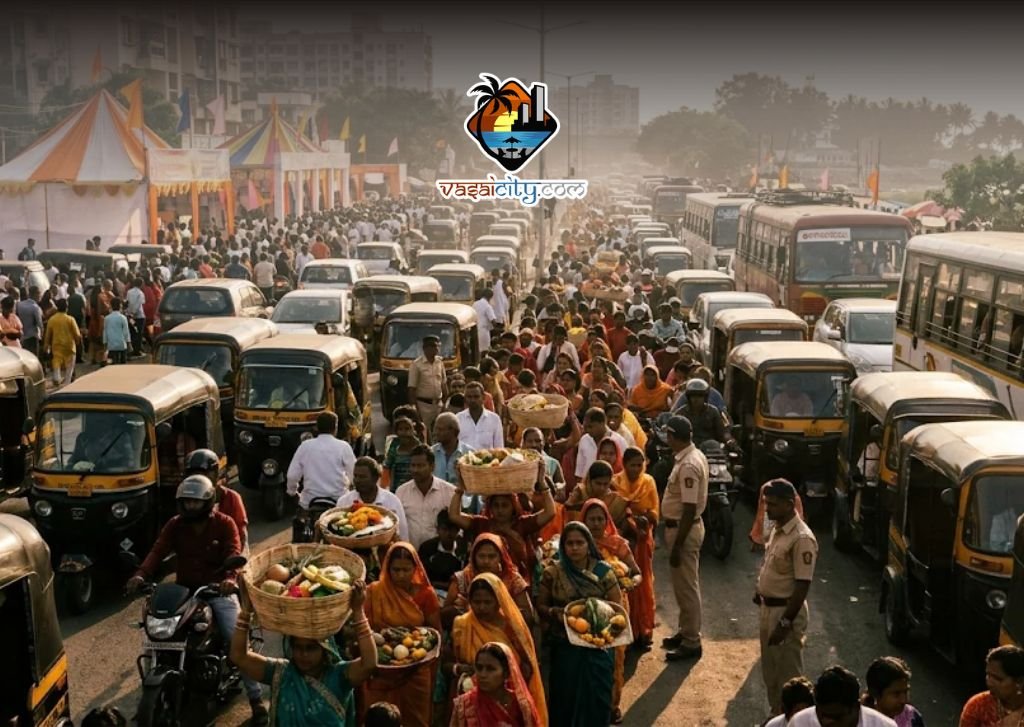
The Vasai-Virar region is home to a significant and growing North Indian diaspora, making Chhath Puja one of the most widely celebrated public events in the local calendar. From early afternoon, large processions of devotees, often carrying traditional bamboo baskets (soop) filled with offerings, began making their way toward prominent water bodies.
Popular locations such as Suruchi Beach in Vasai, Arnala Beach in Virar, Bhuigaon, Rajodi, and Pelhar Lake witnessed unprecedented footfall. Entire stretches of roads leading to these waterfronts were occupied by processions, slowing vehicular movement to a crawl. Because the rituals require devotees to stand waist-deep in water during sunset and sunrise, the movement of crowds is highly concentrated during specific peak hours, creating extreme bottlenecks.
Commuters Face Hours of Chhath Puja Traffic in Vasai-Virar
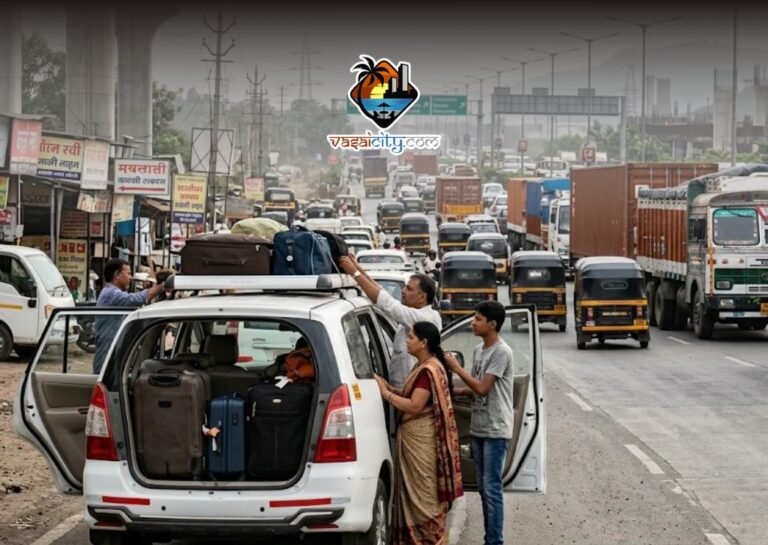
For everyday residents, office-goers, and students, the sudden surge in crowds resulted in severe logistical challenges. The traffic snarls were particularly acute on the east-west flyovers in Nalasopara and Virar, which are notorious for congestion even on regular days. With processions occupying significant portions of the carriageway, vehicles were forced to navigate through narrow, slow-moving lanes.
Many daily commuters reported being stuck in transit for over two hours for journeys that typically take twenty minutes. Public transport was heavily disrupted. Auto-rickshaws were either unavailable, stuck in the gridlocks, or refusing standard fares due to the impassable road conditions. State transport (ST) buses and municipal transport services running towards the coastal villages of Vasai and Virar were severely delayed, leaving many passengers stranded at railway stations and bus depots.
[Internal Link Recommendation: The site editor should insert a link here to an existing VasaiCity.com article about ‘Vasai-Virar East-West Flyover Traffic Issues’ or ‘MBVV Traffic Police Initiatives’ using natural anchor text like “ongoing traffic challenges on Vasai-Virar flyovers”.]
MBVV Traffic Police Caught Unaware by the Surging Crowds
Despite Chhath Puja being an annual festival with a predictably high turnout, the Mira Bhayandar Vasai Virar (MBVV) traffic police appeared unprepared for the sheer scale of the crowds this year. The heavy influx of devotees and vehicles exposed a distinct lack of preemptive traffic planning, such as dedicated pedestrian corridors, advanced traffic advisories, or heavy vehicle diversions.
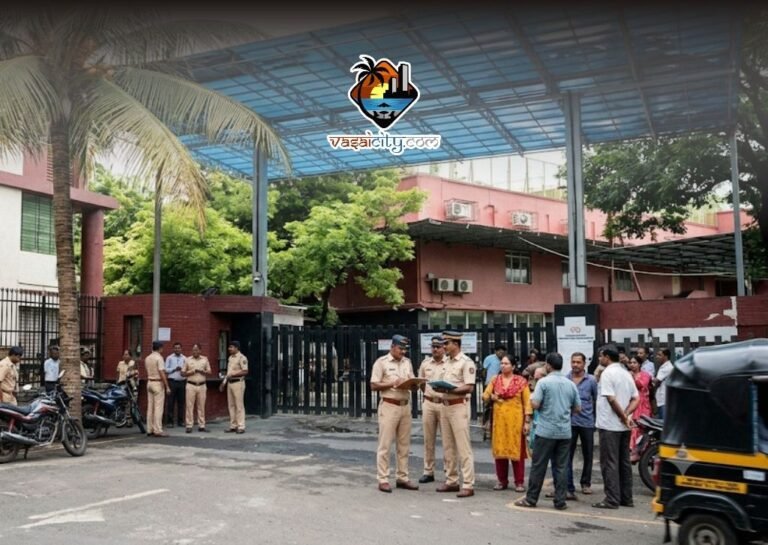
Commuters noted an absence of adequate traffic wardens and police personnel at critical junctions. Without official barricading or route diversions in place, private vehicles, auto-rickshaws, and pedestrian processions mingled in the same lanes, creating chaotic deadlocks. By the time additional police personnel were deployed to clear the vital east-west connectors, the congestion had already spilled over into the inner residential lanes of Nalasopara and Virar West.
Political Participation Adds to the Congestion
The traffic situation was further exacerbated by the heavy involvement of local political leaders and their supporters. Recognising the massive demographic significance of the Chhath Puja crowds, politicians from various parties actively participated in the celebrations.
Political processions, complete with loud music, banners, and large entourages, merged with the religious crowds heading toward the beaches. Additionally, welcome stages and temporary pandals erected along the primary routes consumed valuable road space. The VIP movements of these political figures often caused temporary halts in the already slow-moving traffic, compounding the frustration of ordinary motorists trapped in the gridlock.
The Growing Scale of Chhath Puja in the Vasai-Virar Region
The massive Chhath Puja traffic in Vasai-Virar is a direct reflection of the region’s evolving demographics. Over the past two decades, Vasai, Nalasopara, and Virar have transformed into major residential hubs for migrants from Uttar Pradesh, Bihar, and Jharkhand, drawn by affordable housing and connectivity to Mumbai.
As a result, festivals like Chhath Puja have transformed from modest, community-level gatherings into massive civic events. The VVCMC and local police must now treat this festival with the same level of logistical planning and crowd control as the Ganesh Chaturthi immersions.
Urgent Need for Better Civic Planning and Traffic Management
The severe inconveniences faced by residents highlight the urgent need for a coordinated approach between the VVCMC, the MBVV Police, and Chhath Puja organising committees. Going forward, the administration must implement comprehensive crowd management strategies.
Essential steps include establishing designated parking zones well away from the beaches, implementing strict one-way traffic systems on the days of the festival, and publishing advance traffic diversion advisories for the public. Furthermore, the deployment of adequate police personnel and citizen volunteers is crucial to ensure that emergency vehicles—such as ambulances and fire engines—are not caught in the ensuing gridlocks.
While the Chhath Puja celebrations are a beautiful testament to the cultural diversity of the Vasai-Virar region, ensuring the smooth functioning of the city’s transport infrastructure during such large-scale events remains a critical responsibility of the local administration.
Frequently Asked Questions
Why was there massive Chhath Puja traffic in Vasai-Virar?
The severe traffic was caused by thousands of devotees and their vehicles simultaneously heading towards local beaches and lakes to perform Chhath Puja rituals. The sudden surge in pedestrians and vehicles overwhelmed the local road network, leading to hours-long gridlocks.
Which areas in Vasai, Virar, and Nalasopara were worst affected?
The most affected areas included the routes leading to Suruchi Beach in Vasai, Arnala Beach in Virar, and Bhuigaon. The east-west connecting flyovers in Nalasopara and Virar also witnessed extreme bottlenecks due to the heavy movement of crowds and vehicles.
What rituals caused devotees to gather near water bodies?
Chhath Puja involves offering ‘Arghya’ (holy water and prayers) to the setting and rising sun. This requires devotees to stand waist-deep in water, which is why massive crowds migrate towards local beaches, lakes, and coastal areas during the festival.
Were traffic diversions announced in advance by the MBVV police?
According to local reports and commuter experiences, there was a lack of preemptive traffic planning and advance advisories from the MBVV traffic police. The administration was caught unaware by the scale of the crowds, leading to unmanaged congestion.
How did the congestion impact daily commuters in the region?
Daily commuters faced severe delays, with many stuck in traffic for hours. Public transport was disrupted, auto-rickshaws were largely unavailable or stuck in jams, and movement on essential routes came to a complete standstill.
Why is Chhath Puja celebrated on such a large scale in Vasai-Virar?
Over the years, the Vasai-Virar region has seen a significant demographic shift, with a large and growing population of residents originally from North Indian states like Bihar and Uttar Pradesh. As a result, Chhath Puja has become one of the region’s major cultural and civic events.
Did political participation worsen the traffic situation?
Yes, the presence of various political leaders and their supporters added to the congestion. Political rallies, processions, temporary welcome stages along the roads, and VIP movements further restricted the available carriageway for regular traffic.