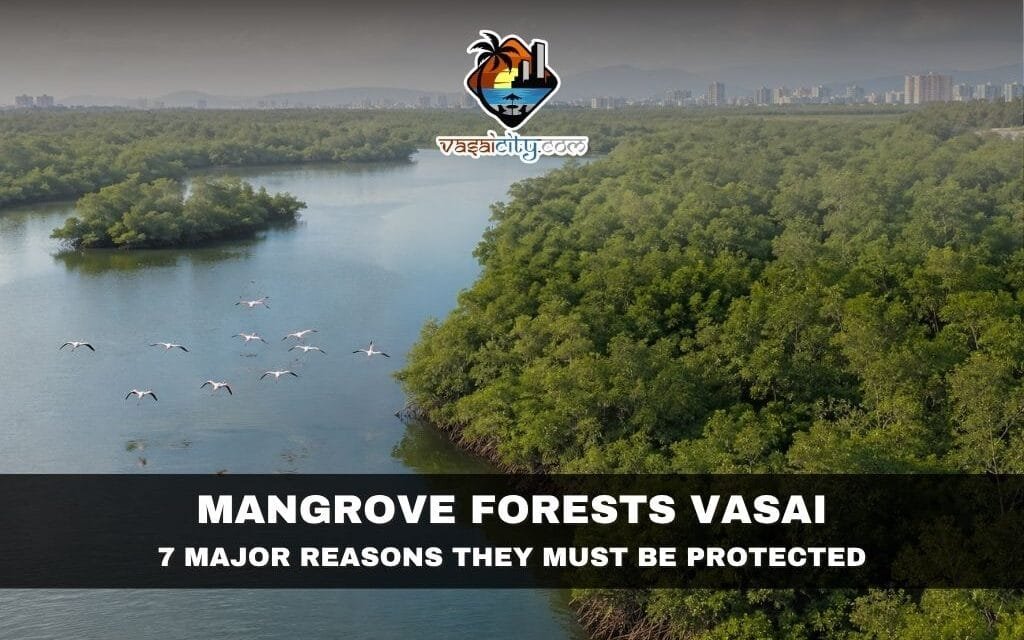
Mangrove Forests Vasai are among the region’s most valuable natural assets, yet they continue to face increasing pressure from rapid urban development. As Vasai expands with new residential projects, commercial spaces, and infrastructure, environmentalists and residents are raising an important question – can the town’s mangrove forests and wetlands survive the pace of modernization?
For generations, Vasai’s wetlands have quietly protected local communities from floods, purified water, supported wildlife, and maintained ecological balance. However, continuous development threatens to replace these natural ecosystems with concrete structures, putting both nature and people at greater risk.
Table of Contents
Why Mangrove Forests Vasai Matter
Wetlands are among the world’s most productive ecosystems. In India, they include mangrove forests, salt pans, freshwater lakes, river systems, marshes, and coastal backwaters.
The country is home to the famous Sundarbans, the world’s largest mangrove forest and a UNESCO World Heritage Site. Yet despite their ecological significance, wetlands remain one of India’s most endangered natural habitats.
The story is no different in Vasai.
The Mangrove Forests Vasai serve as a protective barrier between the sea and urban settlements. These forests absorb tidal energy, reduce coastal erosion, and help minimize the impact of heavy monsoon flooding.
Without them, many low-lying parts of Vasai would become increasingly vulnerable to waterlogging and extreme weather events.
How Mangrove Forests Vasai Protect Residents
The environmental benefits of Mangrove Forests Vasai go far beyond their scenic beauty.
Natural Flood Protection
Mangroves trap sediments, stabilize riverbanks, and slow down tidal currents. During the monsoon, they absorb excess rainwater, reducing flood risks across nearby residential areas.
With climate change leading to more intense rainfall, this natural flood defence has become even more valuable.
Cleaner Water and Air
Mangrove ecosystems naturally filter pollutants before they enter rivers and creeks. Their dense vegetation also improves air quality by absorbing carbon dioxide and releasing oxygen.
For a rapidly urbanising region like Vasai, these ecosystem services are difficult—and expensive—to replace artificially.
Rich Biodiversity
The wetlands provide breeding grounds for fish, crabs, prawns, and numerous aquatic species. They are also home to migratory birds, including the iconic flamingos that visit the Vasai Creek every year.
Many rare and native species depend entirely on these habitats for survival.
Development Pressure on Mangrove Forests Vasai
Urban growth is essential for any developing city, but environmental experts argue that it must be planned responsibly.
Over the years, several large-scale development proposals have targeted land around Vasai’s wetlands and salt pans.
One of the most discussed plans involved developing nearly 1,560 acres of salt pan land into a major urban growth centre comprising residential townships, healthcare facilities, educational institutions, entertainment zones, sports complexes, and industries.
Although the proposal has not moved forward, environmental groups remain concerned that similar projects could be revived in the future.
Large-scale construction in ecologically sensitive zones could permanently alter the natural landscape and reduce the ability of wetlands to protect surrounding communities.
Salt Pans Are More Than Empty Land
Many people view salt pans as unused open spaces waiting for development.
In reality, they perform several critical environmental functions.
The salt pans around Vasai act as natural water retention areas during heavy rainfall, helping reduce flooding in nearby neighbourhoods. They also support thousands of migratory birds that travel vast distances every year.
These wetlands form an important ecological corridor within the Mumbai Metropolitan Region and contribute significantly to regional biodiversity.
Local communities have also depended on these landscapes for generations, practising traditional livelihoods that coexist with nature.
Finding the Right Balance Between Growth and Conservation
No one denies that Vasai requires better infrastructure, improved housing, educational institutions, and healthcare facilities.
However, experts increasingly emphasise that development should not come at the cost of ecosystems that provide essential public services free of charge.
Destroying mangroves today may lead to higher costs tomorrow through increased flooding, declining biodiversity, deteriorating air quality, and expensive flood-control infrastructure.
Sustainable urban planning can ensure that economic growth and environmental conservation work together rather than against each other.
Citizens Continue to Raise Their Voice
Several environmental groups and concerned residents have repeatedly highlighted the importance of protecting Mangrove Forests Vasai.
Public awareness campaigns, citizen initiatives, and conservation efforts have encouraged authorities to carefully examine future development proposals affecting wetlands.
Residents argue that preserving mangroves is not merely about protecting trees—it’s about safeguarding homes, livelihoods, biodiversity, and future generations.
As climate challenges become more severe, communities increasingly recognise that healthy ecosystems are among the strongest defences against natural disasters.
The Future of Mangrove Forests Vasai
The future of Mangrove Forests Vasai will depend largely on policy decisions made today.
Urban expansion is inevitable, but it must be guided by scientific research, environmental impact assessments, and meaningful public participation.
Protecting wetlands does not mean stopping development. Instead, it means planning responsibly so that infrastructure projects coexist with the natural systems that make Vasai a safe and livable region.
As one of the Mumbai Metropolitan Region’s most important wetland landscapes, Vasai has an opportunity to become a model for sustainable coastal development.
The question now is whether decision-makers will choose short-term gains or long-term environmental security.
The answer will shape not only the future of Mangrove Forests Vasai, but also the quality of life for generations of Vasai residents.
Inputs by Biju Cherian
This article is based on the author’s research and perspectives. The publisher claims no responsibility for inaccuracies. Views expressed are the contributor’s alone. Institutions mentioned are not endorsed unless specified.