
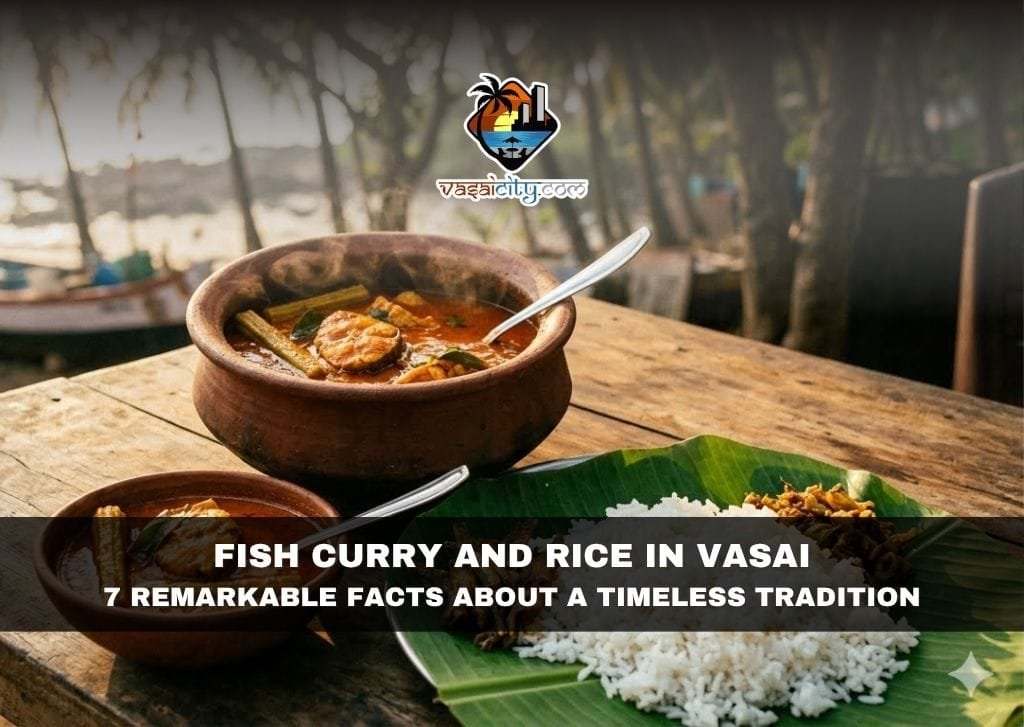
Fish Curry and Rice in Vasai is more than just a popular meal - it is a symbol of the region’s history, culture, and way of life. For generations, this simple yet satisfying combination has brought families together and reflected the unique relationship between Vasai’s fertile lands and abundant waters.
Have you ever wondered who was the first person in Vasai to enjoy fish curry with a plate of steaming rice? While history may never reveal that answer, the landscape of Vasai itself offers clues about how this timeless culinary tradition came into existence.
Table of Contents
The Natural Origins of Fish Curry and Rice in Vasai
Nestled between the Arabian Sea and the foothills of the Tungar ranges, Vasai has long been blessed with natural resources that supported human settlement. The region is home to rivers, creeks, wetlands, and fertile plains that have sustained communities for thousands of years.
Early settlers faced a challenging environment. Dense forests, heavy monsoon rains, overflowing rivers, and rough coastal waters shaped their daily lives. To survive, they adapted to nature rather than fighting against it.
This adaptation eventually led to the foundation of Fish Curry and Rice in Vasai, a meal born from the region’s geography.
How Rice Farming Shaped Vasai’s Identity
The arrival of the monsoon transformed Vasai’s landscape every year. Rivers overflowed, low-lying lands filled with water, and the soil became rich and fertile.
These conditions were ideal for cultivating rice.
Generations of farmers mastered the art of paddy cultivation, turning vast stretches of land into productive rice fields. Rice became the backbone of local agriculture and an essential source of food for families across the region.
The success of rice farming played a crucial role in creating the foundation for Fish Curry and Rice in Vasai, as rice became a staple ingredient in nearly every household.
Rice: The Grain That Thrived in Vasai
Unlike many crops, rice flourishes in water-rich conditions. The heavy monsoon rains that could have been a challenge instead became a blessing for local farmers.
Over time, rice cultivation became deeply woven into the social and economic fabric of Vasai. Farmlands were passed down through generations, preserving both livelihoods and traditions.
The Fishing Communities That Fed a Region
While some residents became experts in farming, others turned toward the waters.
Vasai's rivers, creeks, and coastline provided an abundance of fish throughout the year. Fishing communities learned the rhythms of the sea and developed skills that were handed down from one generation to the next.
The sea became their workplace, and fishing became a way of life.
These communities supplied fresh fish not only to local markets but also to households that depended on seafood as a primary source of nutrition. Their contribution remains an important part of the story behind Fish Curry and Rice in Vasai.
A Perfect Partnership Between Land and Water
What makes Fish Curry and Rice in Vasai so special is the way it represents two interconnected livelihoods.
Farmers harvested rice from the fertile soil. Fisherfolk brought fish from the rivers and sea. Through trade and cooperation, both communities depended on each other.
Farmers sold rice and purchased fish. Fishermen sold fish and purchased rice.
This relationship created a sustainable local economy that survived for centuries. It was an ecosystem built on mutual support, where agriculture and fishing worked together to sustain entire communities.
The Role of Vasai’s Kitchens
While farmers and fishermen supplied the ingredients, it was the households of Vasai that transformed them into memorable meals.
Across generations, home cooks experimented with local spices, coconut, and traditional recipes to create delicious fish curries. Every family developed its own variations, but the combination of fish and rice remained constant.
No historical record tells us where the first serving of fish curry and rice was prepared. No one knows who first paired freshly cooked rice with a flavorful fish curry.
Yet the meal endured.
Day after day, year after year, and generation after generation, it became a cherished part of everyday life.
Why Fish Curry and Rice in Vasai Remains Relevant Today
Modern Vasai has changed dramatically. Urban development, new lifestyles, and changing food habits have transformed the region over the past few decades.
Despite these changes, Fish Curry and Rice in Vasai continues to hold a special place in local culture.
For many residents, the meal evokes memories of family gatherings, traditional celebrations, and childhood afternoons spent around the dining table.
It is a reminder of a simpler era when communities lived closely connected to nature and relied on local resources for their sustenance.
Fish Curry and Rice as a Symbol of Vasai Heritage
A plate of fish curry and rice tells a story that goes far beyond food.
The rice reflects the fertile fields nourished by monsoon rains. The fish represents the rivers, creeks, and sea that have sustained local communities for centuries.
Together, they tell the story of the people of Vasai - individuals who learned to thrive between mountains, wetlands, and the Arabian coastline.
Today, Fish Curry and Rice in Vasai remains one of the strongest symbols of the region’s cultural identity. It connects the present generation with the traditions of the past and preserves memories of a lifestyle shaped by nature.
As Vasai continues to grow and evolve, this humble meal serves as a delicious reminder of where the region came from - a place where the land provided rice, the waters provided fish, and together they helped build a unique and enduring culture.
For more stories about Vasai's rich heritage, explore our feature on - Discover The City.
Inputs by Biju Cherian
This article is based on the author’s research and perspectives. The publisher claims no responsibility for inaccuracies. Views expressed are the contributor’s alone. Institutions mentioned are not endorsed unless specified.
